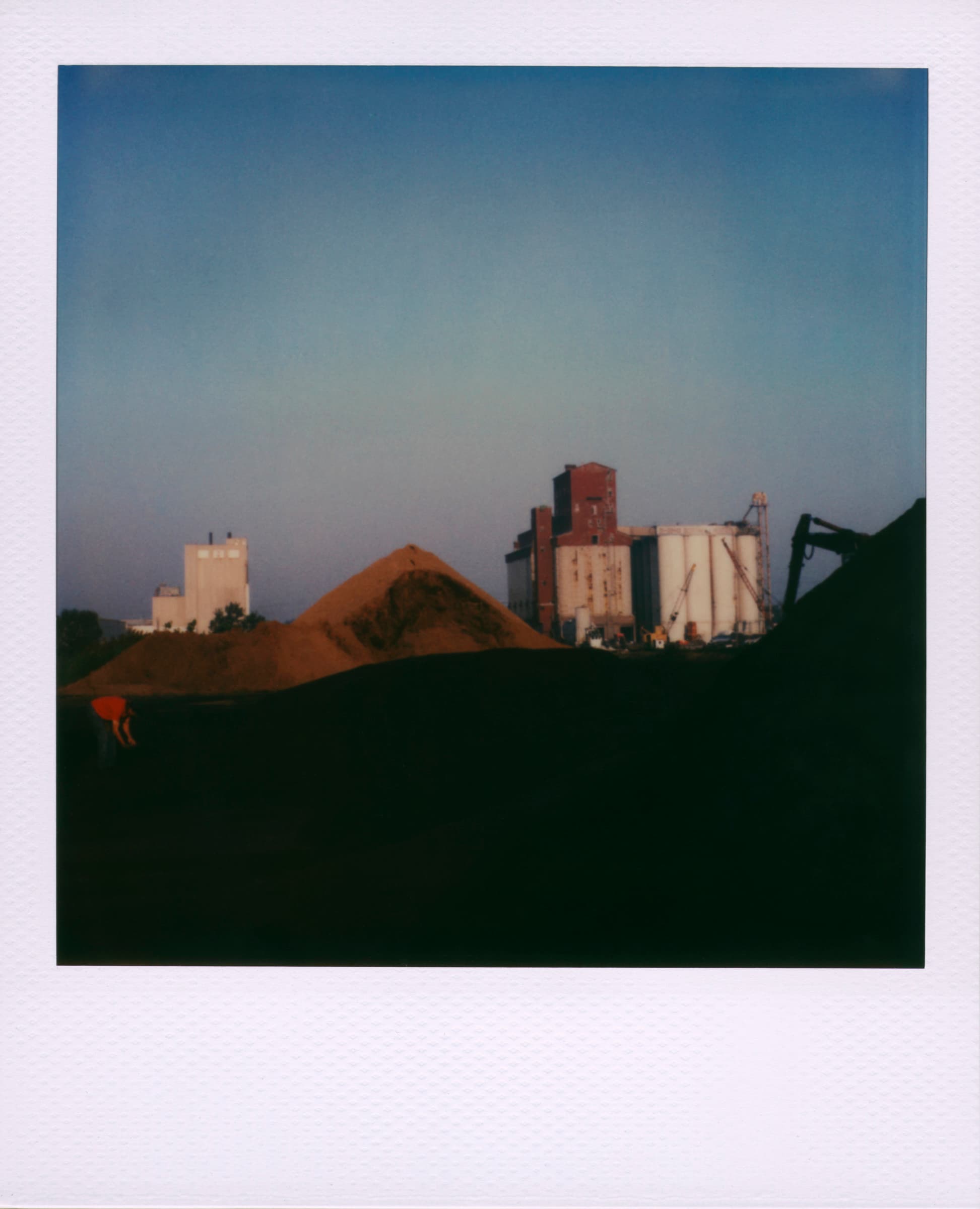
Chicago Southeast SX-70 Polaroids
Photo: Jon Lowenstein | NOOR
Chicago, Illinois, USA - 2000. At one time Chicago's Southeast side was the industrial epicenter of the world. It housed United States Steel and many other industrial companies that made the world's industry function. However, in the 1970's the world began to change and by 1982 when U.S. Steel finally shuttered its doors the neighborhood was only a ghost of its former past. However people stayed and continued to inhabit the post-industrial space. These pictures were taken in 2000 throughout the area and today there are still small industries in the neighborhood. Chicago's Southeast Side is an interesting and dynamic place often overlooked by other Chicagoans. The area includes the communities of South Chicago, South Deering, the East Side and Hegewisch. Within those communities are smaller neighborhoods with colorful names like the Bush, Irondale, Slag Valley, Arizona, Millgate, and others. Some of these names are reflective of the natural features of the region. Others relate to the tremendous historical influence of heavy industry, especially the steel industry. United States Steel South Works, Wisconsin Steel, Republic Steel, Pressed Steel and other industrial operations including General Mills and the Ford Motor Company provided the engine that drove the economy in the region where the Calumet River emptied into Lake Michigan. One must say emptied (past tense) because the Calumet River, like its counterpart to the north, the Chicago River, has been reversed and now flows backward. The mills and other employers offered jobs which attracted thousands of immigrants to the area. Irish, Germans and Swedes were followed by Poles, Italians, Greeks, Serbians, Croatians, Slovenians, Eastern European Jews, Lithuanians, Hungarians, and others. African Americans from the South and immigrants from Mexico provided the labor when the United States shut the open door of European immigration after World War I. These newcomers to the area brought their own culture and institutions with them. Perhaps the most important of these institutions were the churches and houses of worship. Whatever was happening in United States urban history after the Civil War was reflected in these communities. Industrialization, unionization, immigration, and urbanization were themes which played out in Chicago's Southeast Side.
Keywords
License this photograph
Available for editorial, commercial, and fine art licensing through The Artefakt. Rights-managed and artist-approved.