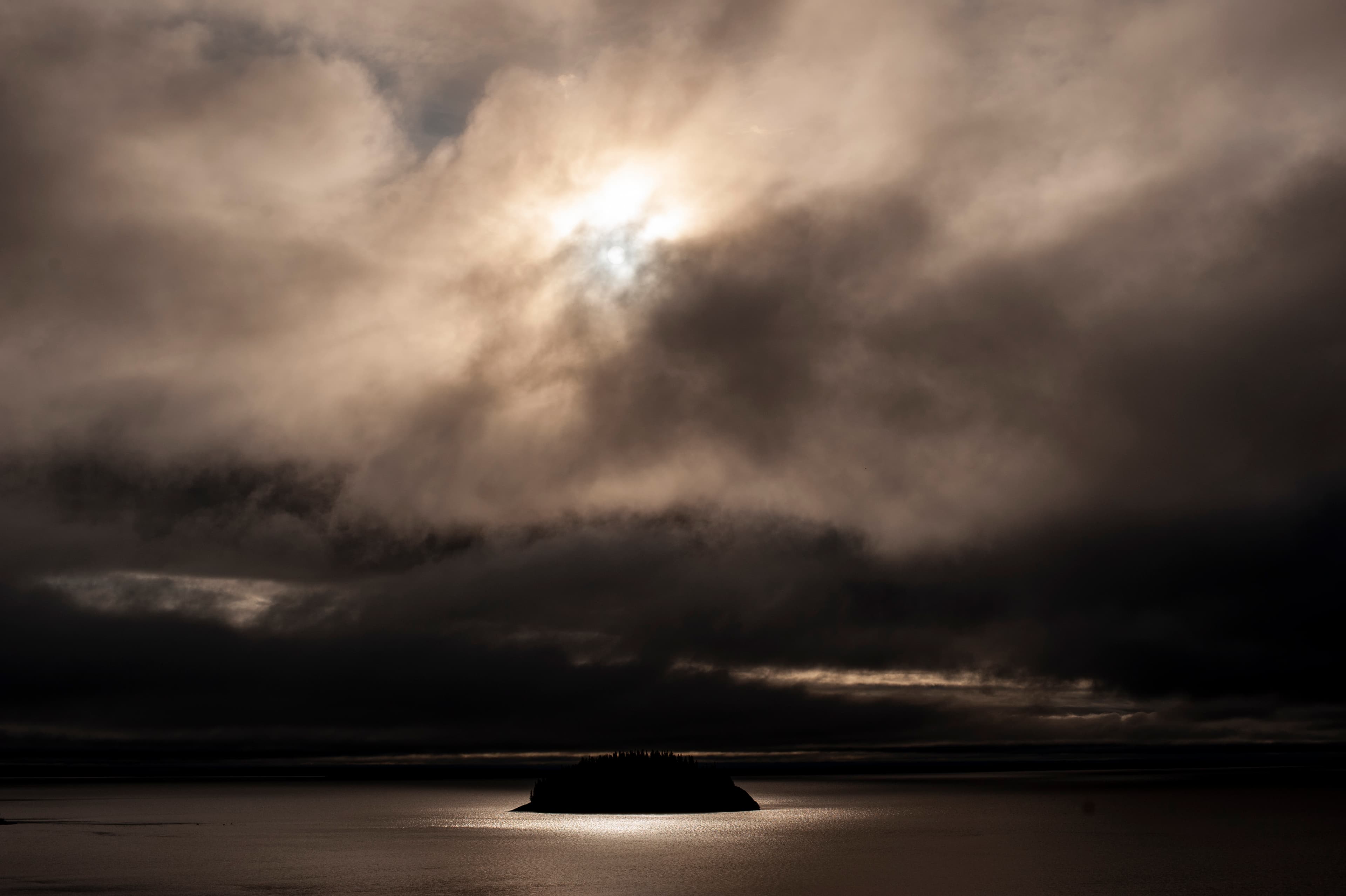
Photo: NOOR
The Oil Sands or Tar Sands region in Alberta, Canada is now one of the largest producers of petroleum in the world. The Athabasca Oil Sands (also known colloquially as the Athabasca Tar Sands although there is no actual tar) are large deposits of bitumen, or extremely heavy crude oil, located in northeastern Alberta, Canada - roughly centered around the boomtown of Fort McMurray. These oil sands, hosted in the McMurray Formation, consist of a mixture of crude bitumen (a semi-solid form of crude oil), silica sand, clay minerals, and water. The Athabasca deposit is the largest reservoir of crude bitumen in the world and the largest of three major oil sands deposits in Alberta, along with the nearby Peace River and Cold Lake deposits. Together, these oil sand deposits lie under 141,000 square kilometres (54,000 sq mi) of sparsely populated boreal forest and muskeg (peat bogs) and contain about 1.7 trillion barrels (270?10^9 m3) of bitumen in-place, comparable in magnitude to the world's total proven reserves of conventional petroleum. With modern unconventional oil production technology, at least 10% of these deposits, or about 170 billion barrels (27?10^9 m3) were considered to be economically recoverable at 2006 prices, making Canada's total oil reserves the second largest in the world, after Saudi Arabia's. The Athabasca deposit is the only large oil sands reservoir in the world which is suitable for large-scale surface mining, although most of it can only be produced using more recently developed in-situ technology.[
License this photograph
Available for editorial, commercial, and fine art licensing through The Artefakt. Rights-managed and artist-approved.