Gray Zones: Unmaking the Myth of a Polarized Nation
An exhibition of work by eminent photographers that contradicts the narrative of extreme and intractable division in the USA.
Presented by The Puffin Foundation · Curated by Danny Wilcox Frazier (The VII Foundation)
On view June 20 – August 15, 2026 at Puffin Brooklyn, 227 5th Ave (between President & Carroll), Brooklyn, NY. Opening June 20, 12–5 PM, with a panel at 1 PM.
Gray Zones was inspired by the semiquincentennial of the United States, which feels less united with every passing day. Yet the reality is that all of us — urban or rural, queer or straight, born in the USA or elsewhere — share similar struggles, loves, hardships, and joys. The dominant narrative is invested in dividing us, in order to concentrate wealth and power in the hands of the few while keeping the rest of us on the margins.
The curation of this exhibit undercuts that narrative by pairing photography projects that provide realistic insights into our collective and personal experiences. They show the moments of pain and beauty that define our lives as well as the sites where we come together in protest. These stories are warning signs, depicting the economic and social decline that afflicts so many of us, seen here through its impact on the Midwest.
This exhibition is an invitation to look beyond binaries and recognize the gray zones where we overlap — to see ourselves in each other, regardless of race, class, or other differences. It is a reminder that solidarity is not only possible but necessary if we are to continue as a nation.
Nina Berman
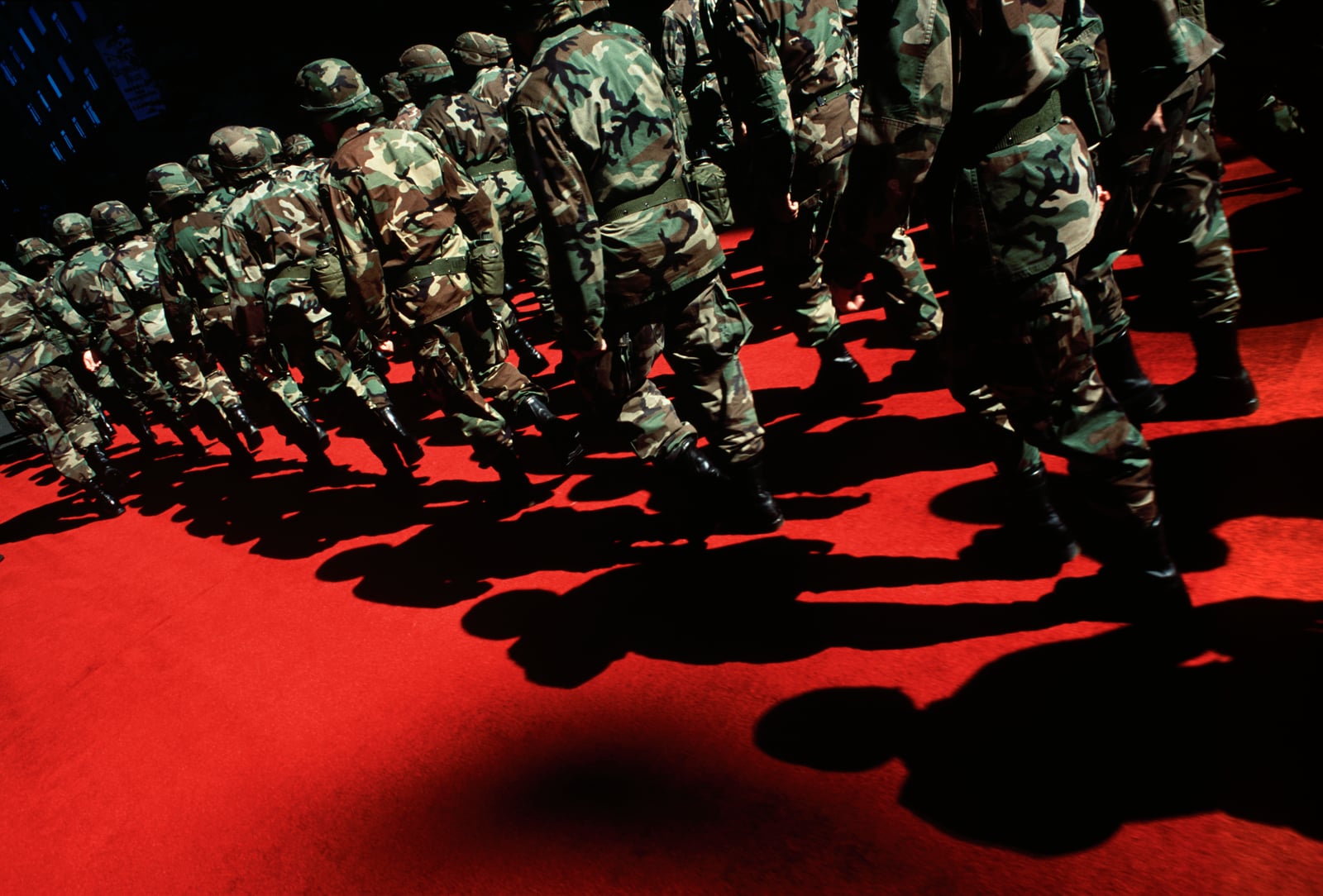
Soldiers on Red Carpet, 2001 — Nina Berman
Sheila Pree Bright
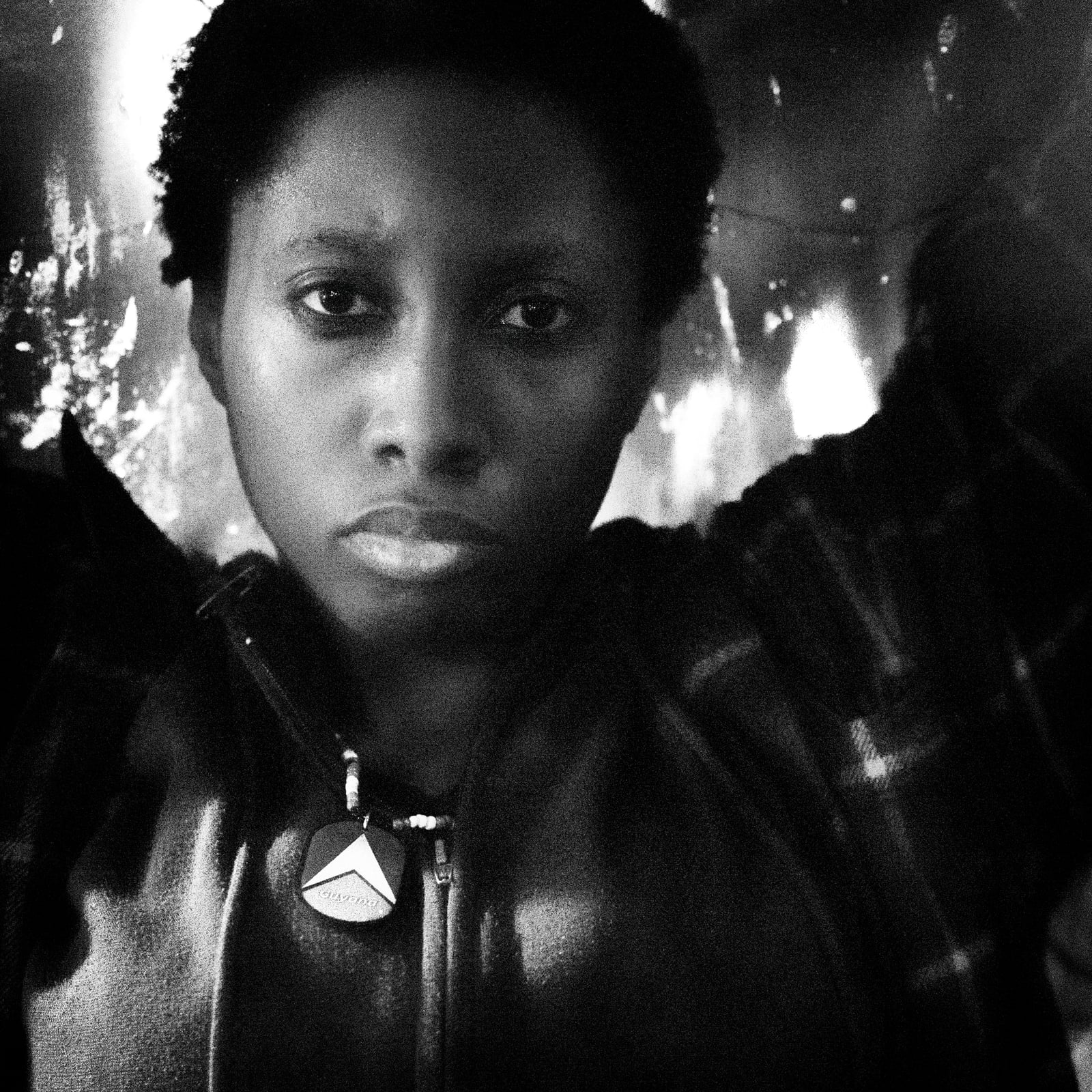
2015, Students of Historically Black Colleges and Universities stand in solidarity with students of University of Missouri, demanding the resignation of President Tim Wolfe. Atlanta, GA — Sheila Pree Bright
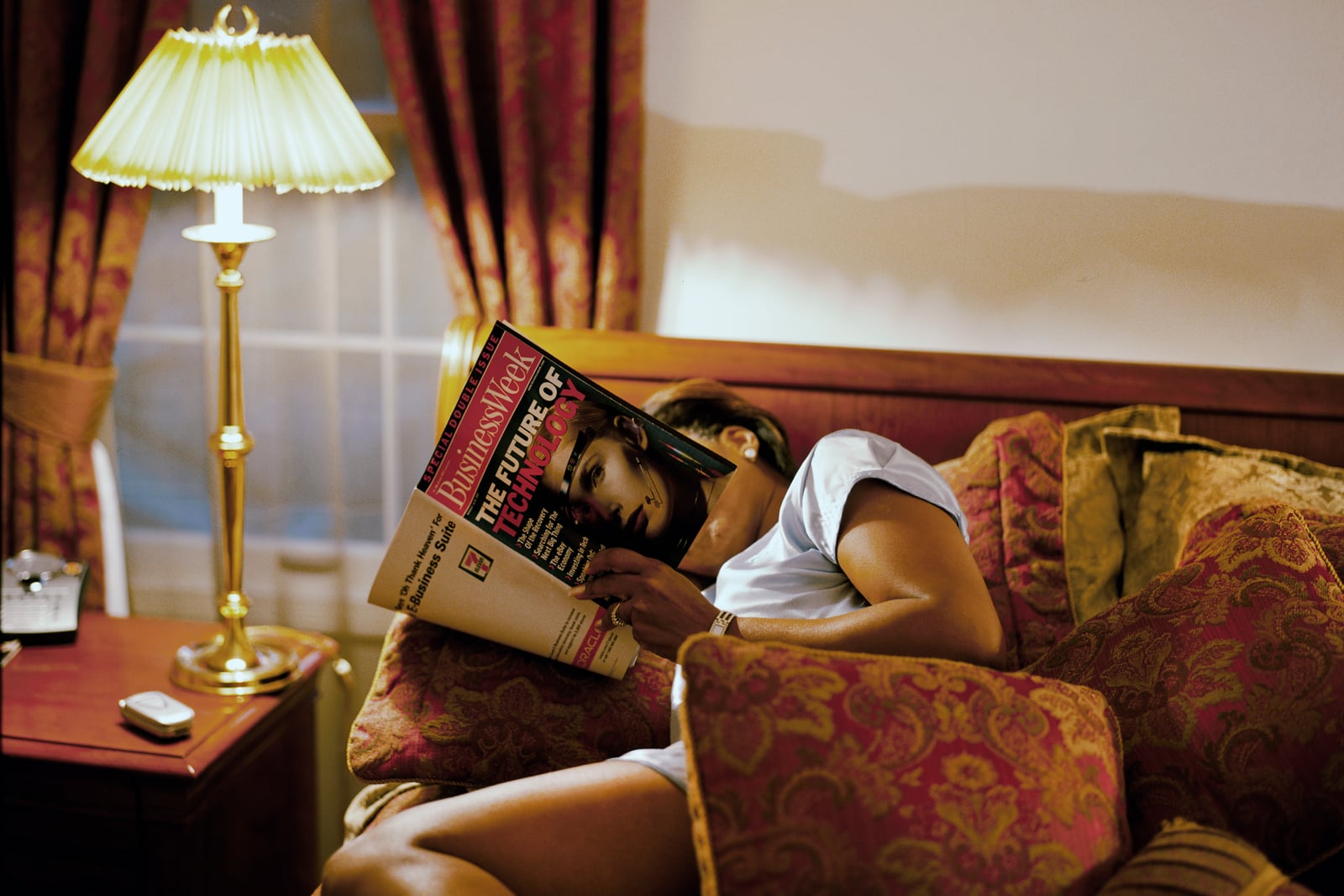
Suburbia 2005, Untitled 12 — Sheila Pree Bright
Tyrel Iron Eyes
(Un)Disturbed Use and Occupation is a project that draws from the language in Article II of the 1868 Fort Laramie Treaty between the United States and bands of the Lakota in the wake of the Powder River War, primarily the clause which states that the lands described shall be “set aside for the absolute and undisturbed use and occupation of the Indians herein named.” That undisturbed use lasted for roughly six years, when the US Army entered the Black Hills searching for gold. Despite being dispossessed of our lands by the US Military, Native American peoples serve in the military at much higher rate than any other demographic. The photos in this series extend beyond Treaty territory and encompass Oceti Sakowin Ancestral Territory.
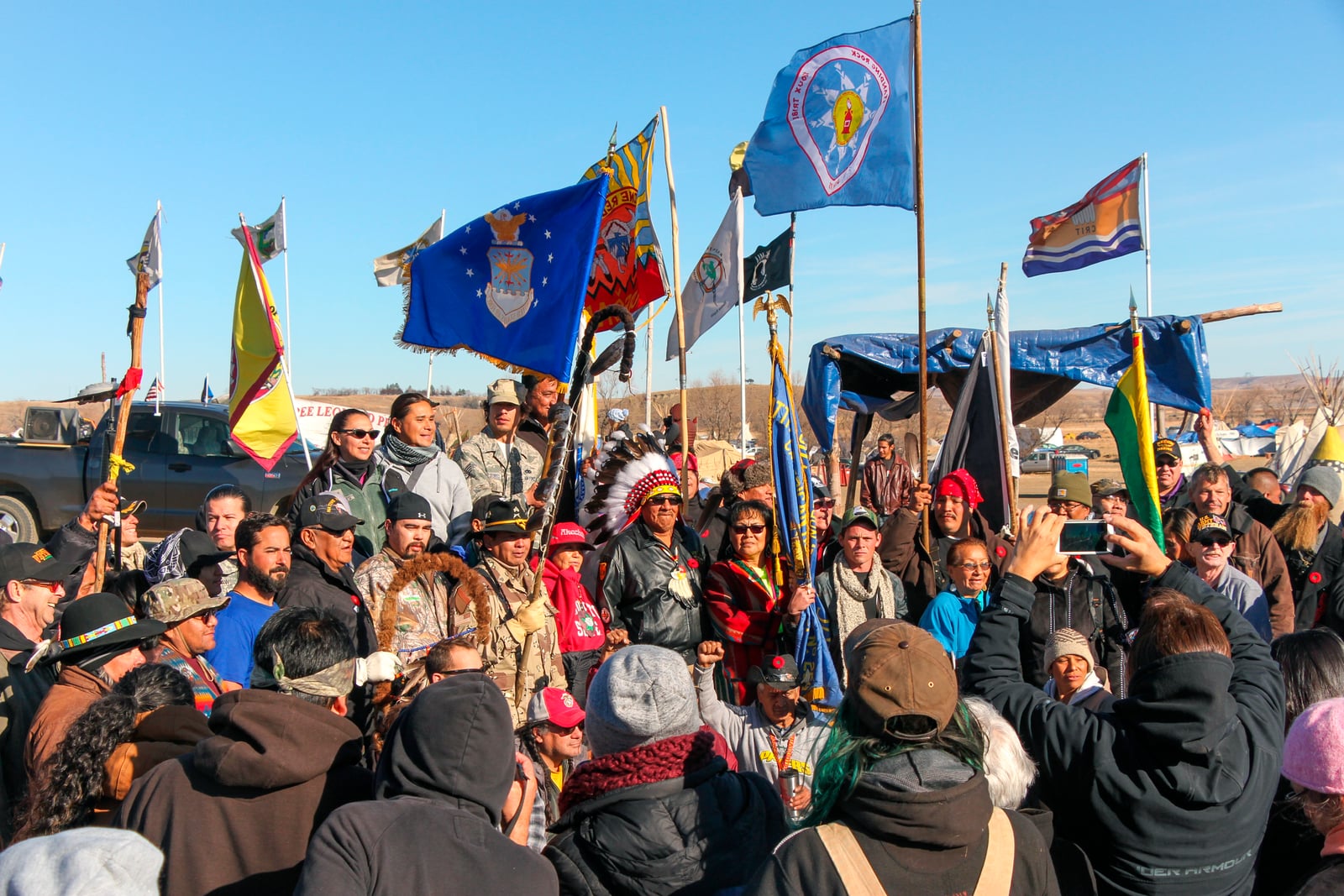
Dakota Access Pipeline Veterans Day – November 11, 2016. From April 1st, 2016, until late February, 2017, Standing Rock’s northern border was the location of an international protest against the Dakota Access Pipeline. As people camped and lived along our northern border, they created an ephemeral community larger than many established towns in the state of North Dakota. When I traveled home from college, I had to cross through a military checkpoint. Until the bridges were closed entirely, at least. While I was unable to travel normally due to military presence, we still celebrated those among our ranks who enlisted in the military. — Tyrel Iron Eyes
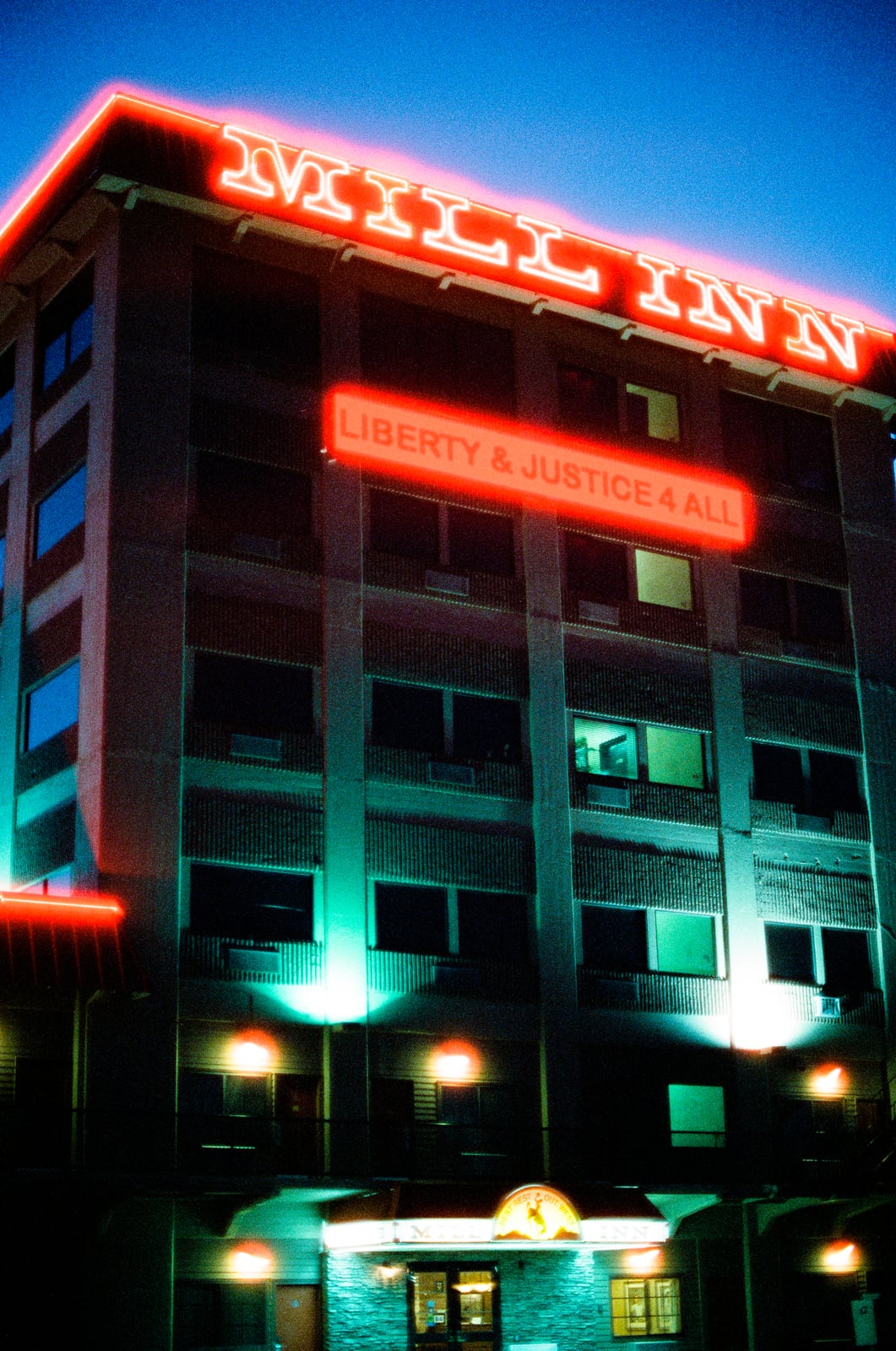
Sheridan WY – September, 2022. A converted mill at the intersection and overlap of dozens of Tribal nations, proclaiming “Liberty & Justice 4 All” while the Tribes who called that place home have been confined to reservations miles and miles away. Filmstock: CineStill 800T — Tyrel Iron Eyes
Danny Wilcox Frazier
Since 2008, Danny Wilcox Frazier has photographed the impact of depopulation on rural communities across the Midwest and Great Plains. Lost Nation documents the slow decay that has turned many small towns into rural ghettos.
Nationally, rural communities in the United States have lost more than 12 million people since 2000. The most recent census puts its share of the nation’s population at just 16 percent – the lowest in recorded history and down from 72 percent a century ago.
Frazier’s photographs do not shy away from the economic struggles many people in rural communities face due to out-migration. More importantly though, this project recognizes those individuals working to maintain their culture and identity in small towns and rural outposts throughout the United States.
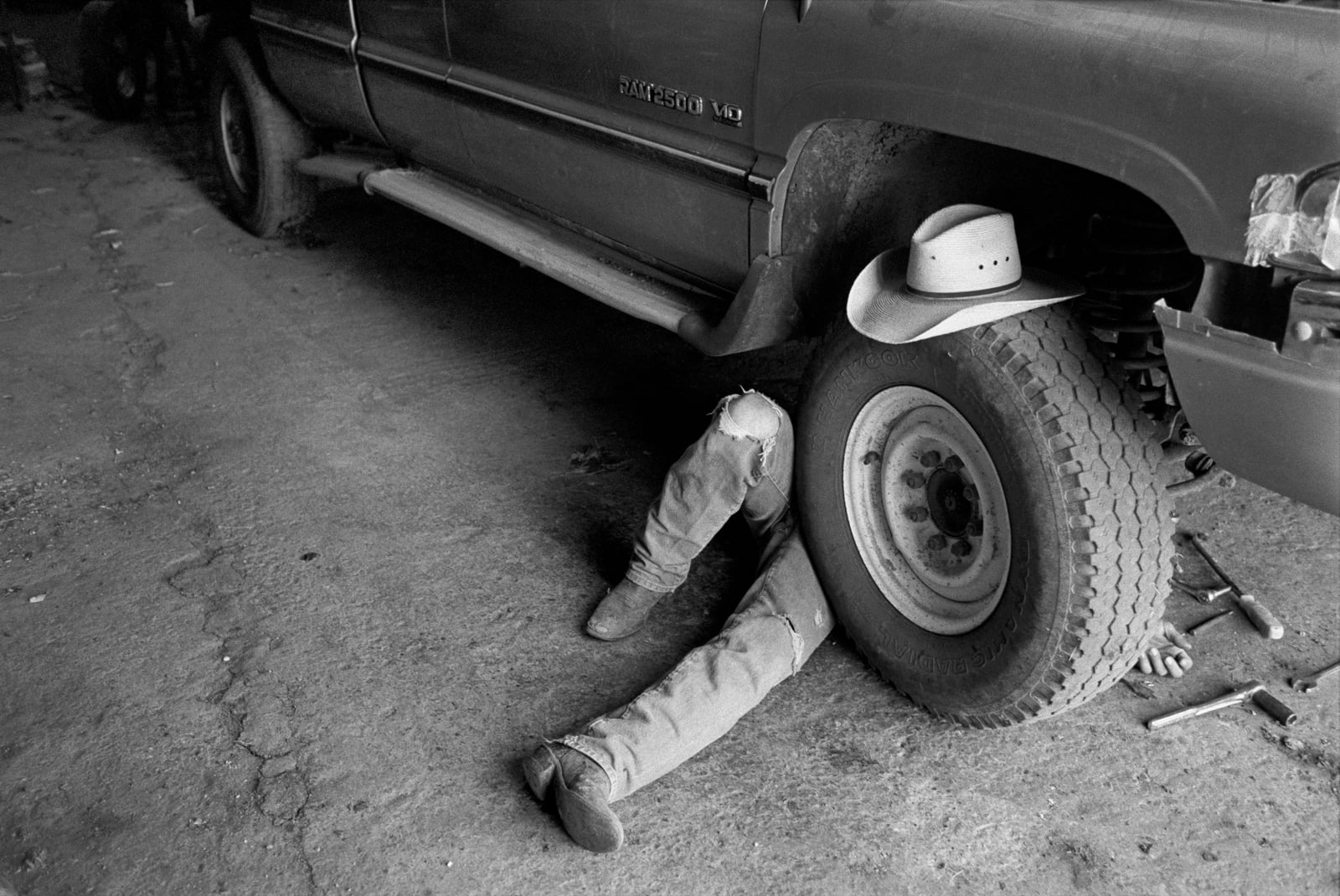
John Neumann works on an old pickup, Neumann ranch, Cactus Flat, South Dakota. John shot himself on June 9, 2019. He left behind a six-month-old son, Stetson, and fiancée, Tabatha Swartz. The lack of access to healthcare in rural South Dakota was central to the cowboy’s death. Stetson will take over the ranch when he turns 18, John’s wish for his son. (2008) — Danny Wilcox Frazier / VII
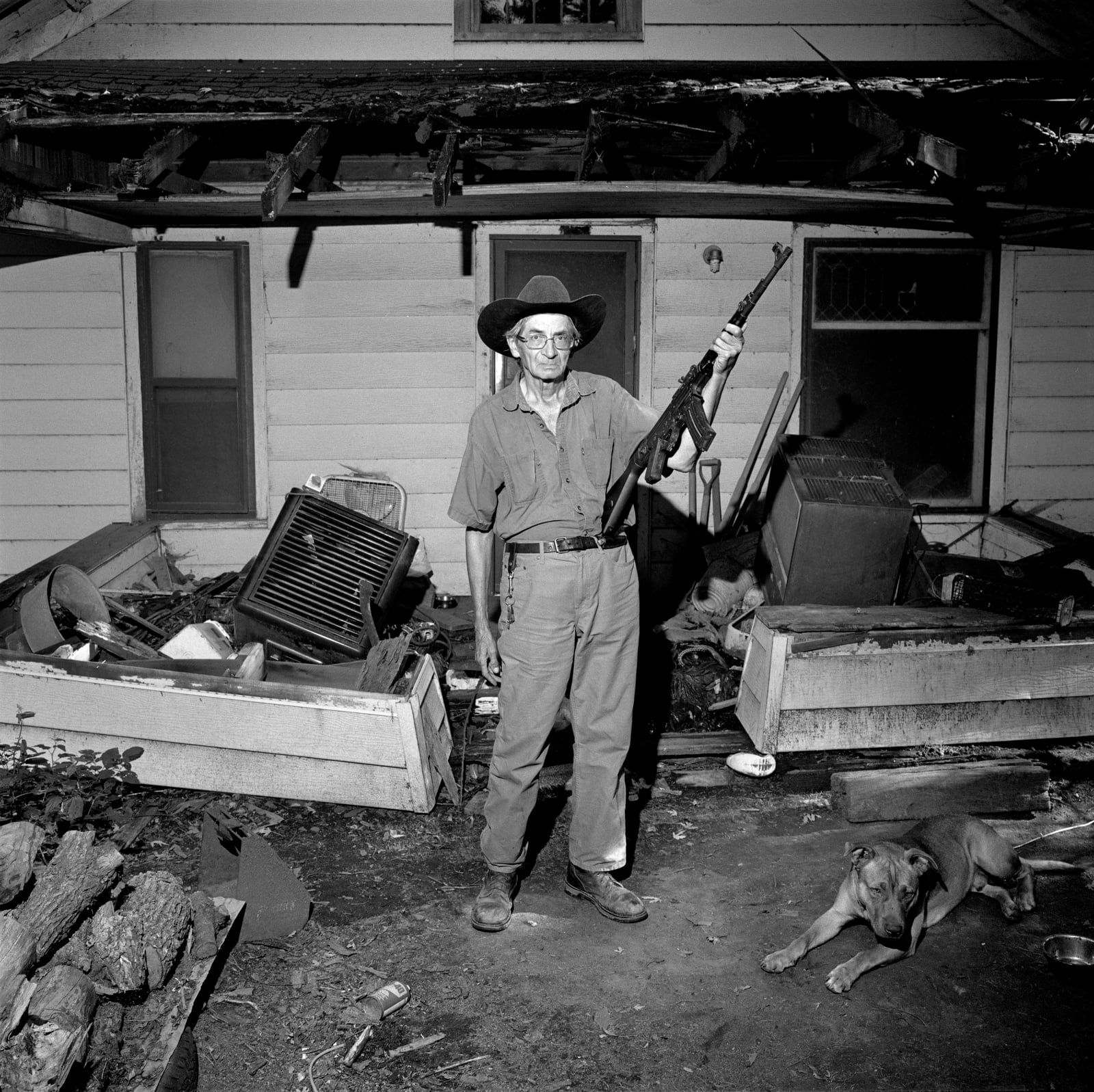
Home Defense, Cowles, Nebraska (pop. 30). (2017) — Danny Wilcox Frazier / VII
Jordan Gale
When I talk about where I’m from, I often mention the brutal winters that seem to paralyze the American Midwest for months on end at the beginning and end of each year. Maybe it’s the early darkness or the bone-chilling wind. I try to describe the blinding landscape and how the bare sun reflects off frozen cornfields blanketed in endless sheets of snow. I tell people I don’t visit home because I can’t stand the winters. I’m never honest.
I rarely admit that the thought of Iowa brings up my estranged mother and her addictions that shaped my family for years. I think about my 90‐year‐old grandmother whom I keep putting off calling, and the close friends who died far too young. Home stirs deep feelings of resentment and longing that defined my adolescence. For much of my young adult life, I felt trapped, and I took that anger out on the people closest to me. Now, when I return, those old emotions rise quickly. I fall back into familiar habits, maybe to avoid confronting my past or the circumstances many loved ones still face. For years, I dreamed of running away and never looking back. Yet this place and the people in these photographs ultimately shaped who I am today.
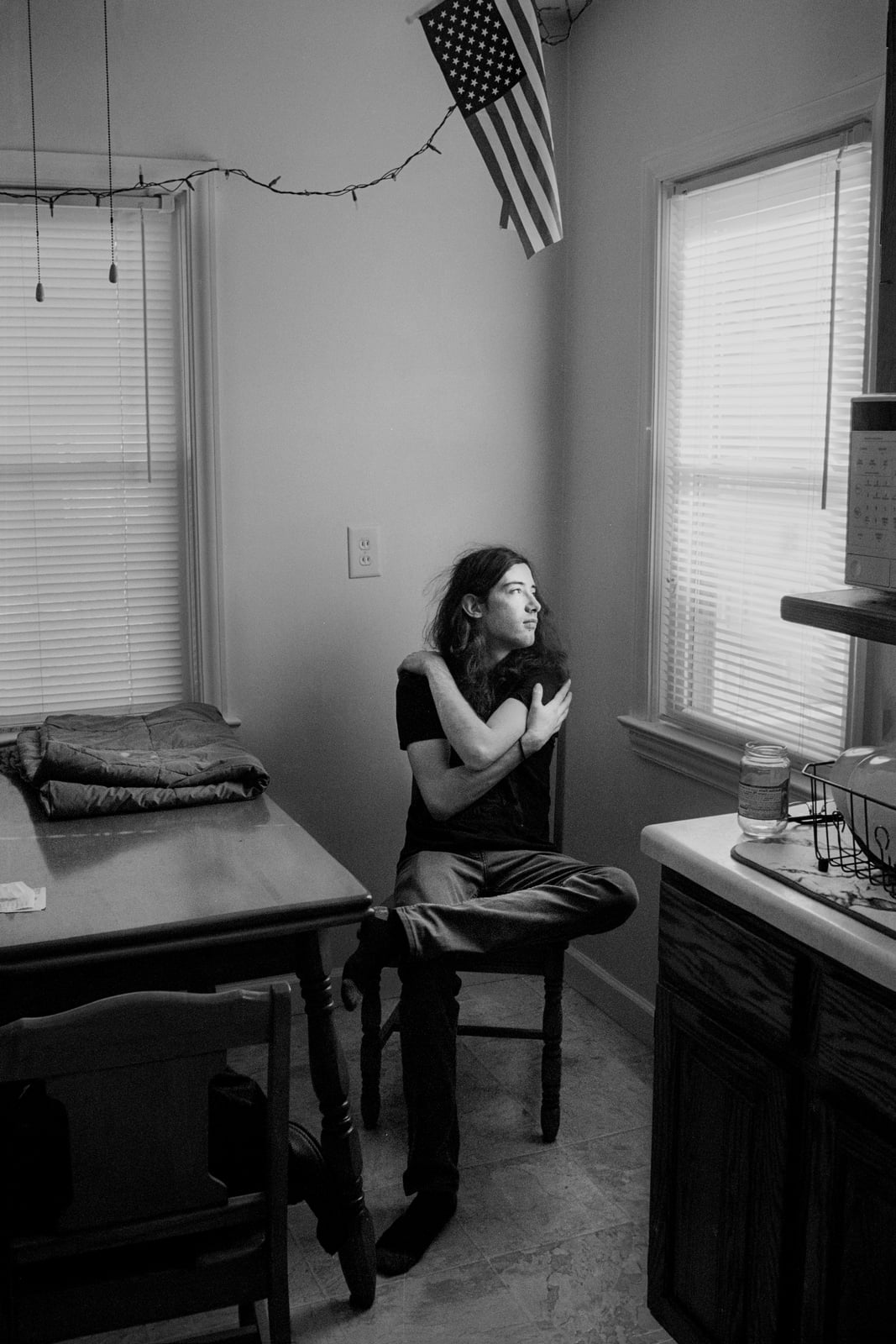
Jack Staring Out the Window. Cedar Rapids, Iowa 2021. — Jordan Gale
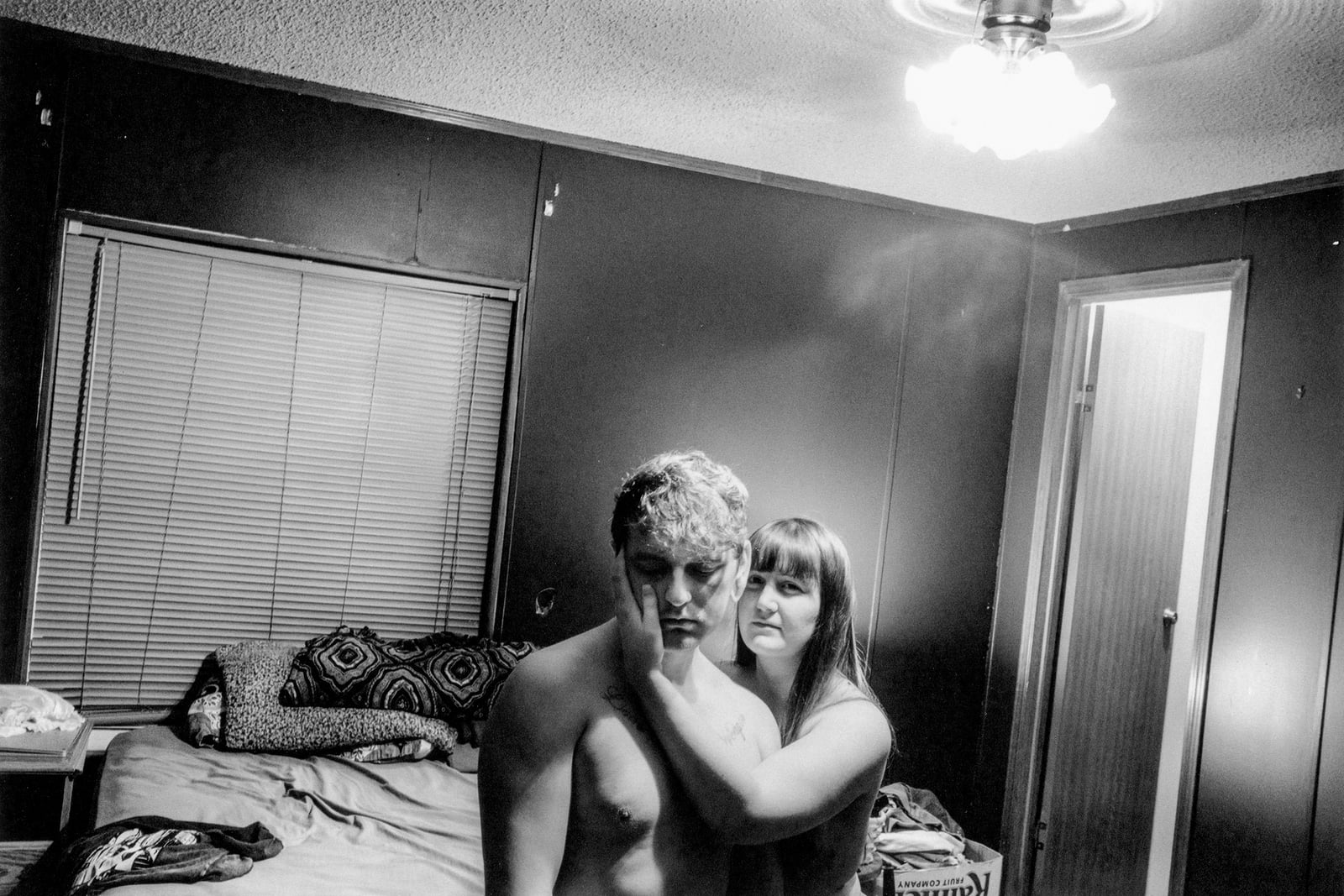
Taylor Pulling Christian Closer. Cedar Rapids, Iowa. 2022 — Jordan Gale
Ron Haviv
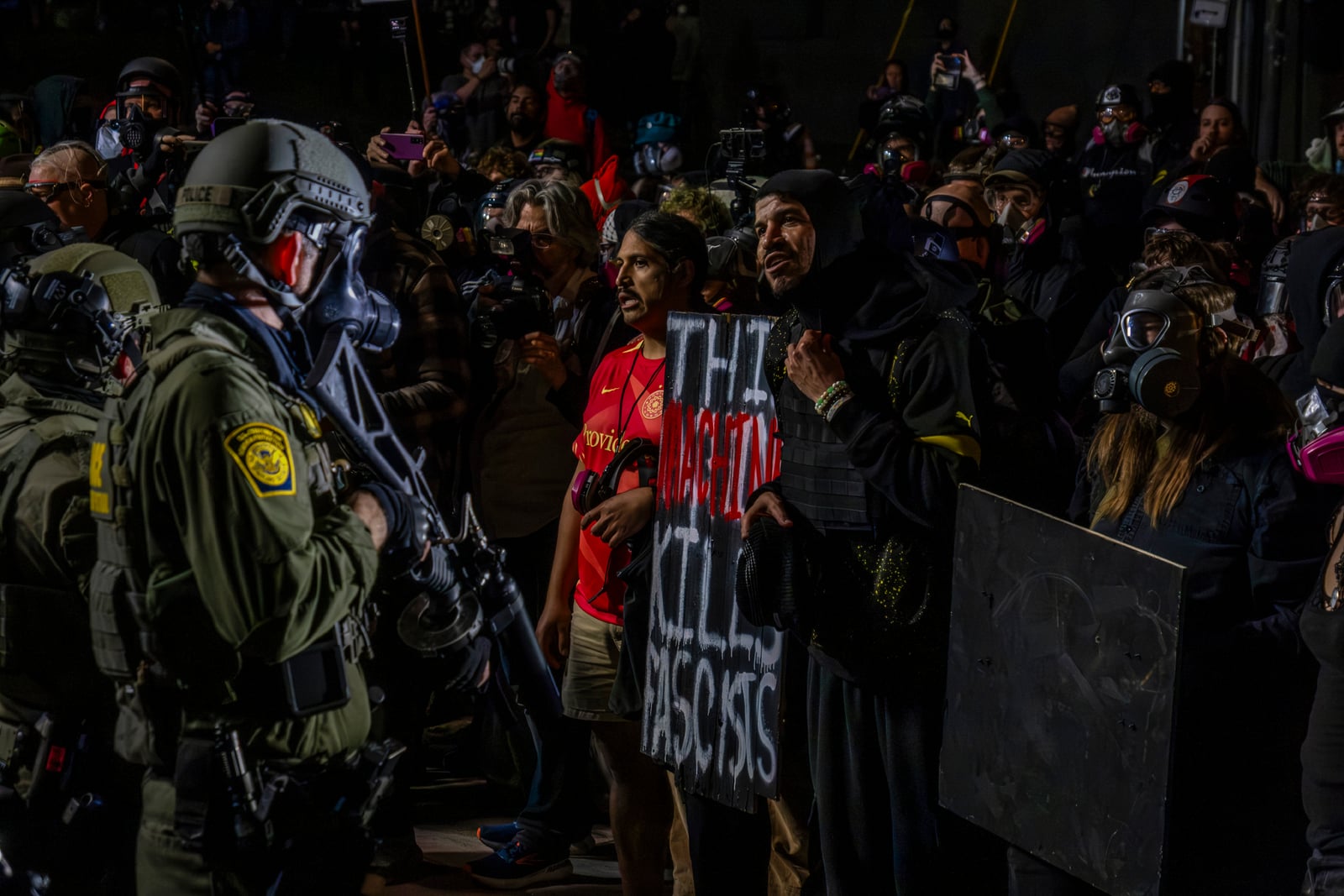
Protestors clash with DHS/ICE police at an ICE facility after a No Kings rally in Portland against policies of the U.S. government on March 28, 2026. — Ron Haviv / VII Foundation
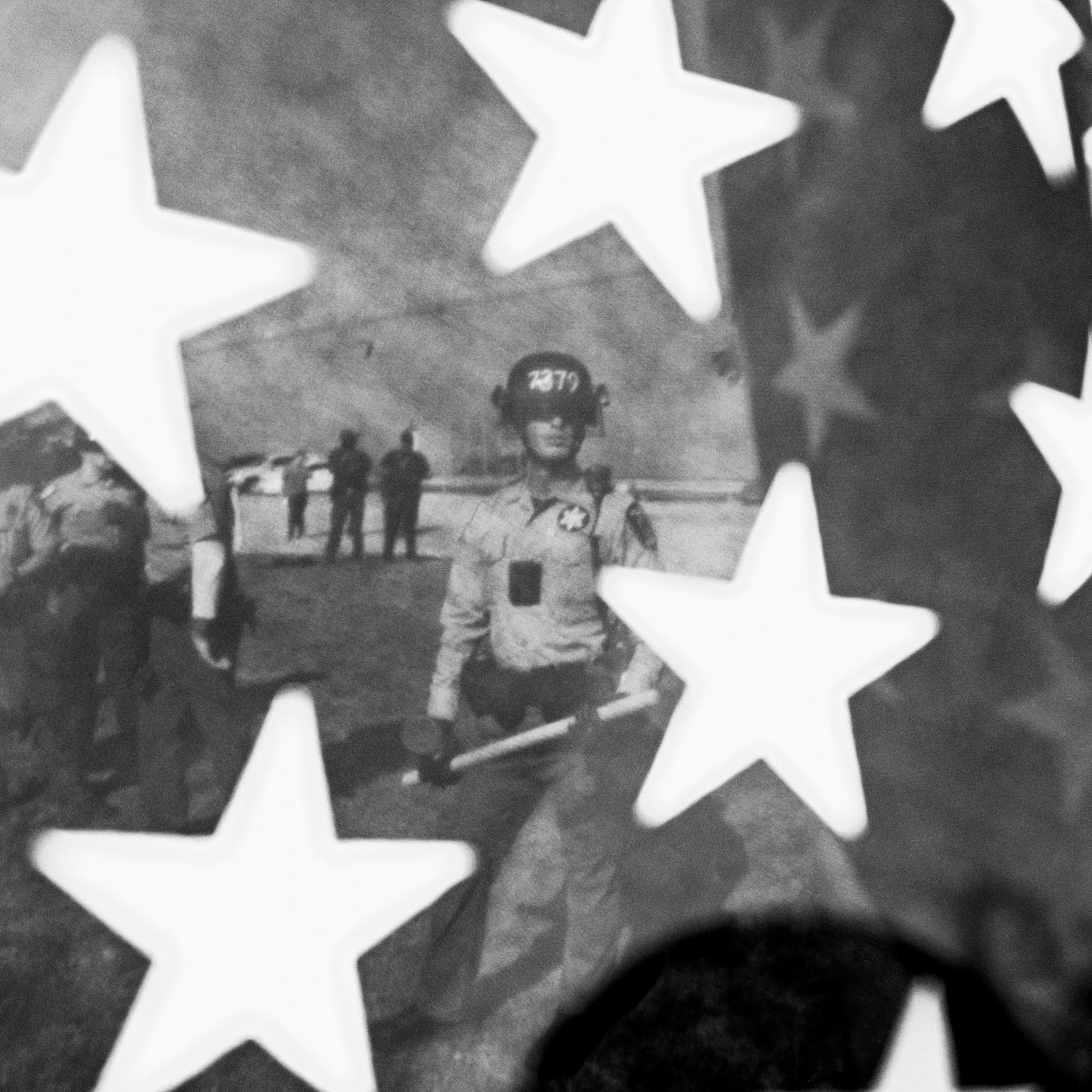
An Illinois state police officer stands outside the Broadview ICE and detention center, October 2025. — Ron Haviv / VII Foundation
Brooklynn Kascel
Focused exclusively on queer and trans people who live in the midwest - a place of distinct beauty, a place I love, but somewhere that is not welcoming to all - these pictures are a glimpse into two long-term bodies of work that have developed inside this zone of the U.S. for 10 years.
Since 2017, I have photographed my queer and trans peers across the greater midwestern region in the ongoing series, Fear And Loving. By combining autobiographical documentary and conceptual imagery from my home state of Iowa, the first state in the nation to remove gender identity as a protected class from its’ civil rights act in 2025, I chronicle interpersonal exchanges fastened within the midwestern landscape during the newest anti-LGBTQIA2+ era in America.
Of Body and Land is the second chapter and documents a growing health equity crisis in the state of Missouri—where trans and non-binary people are being denied gender-affirming, and life-saving, healthcare after the passage of SB49 nearly three years ago. The justification to deny access to hormones and surgery for adults and puberty blockers for youth is not based on scientific evidence, but rather beholden to political interference and rooted in gender discrimination against anyone who does not fit into the gender binary that our government hopes to mandate.
I never got the sense of hopelessness in Missouri, but rather witnessed overwhelming feelings of resilience and love. It is understood and unspoken that the U.S. government's overreach and discrimination against trans, non-binary and gender diverse people in America, no matter how terrifying or exhausting, will always be overcome with support for each other; this community can never be erased.
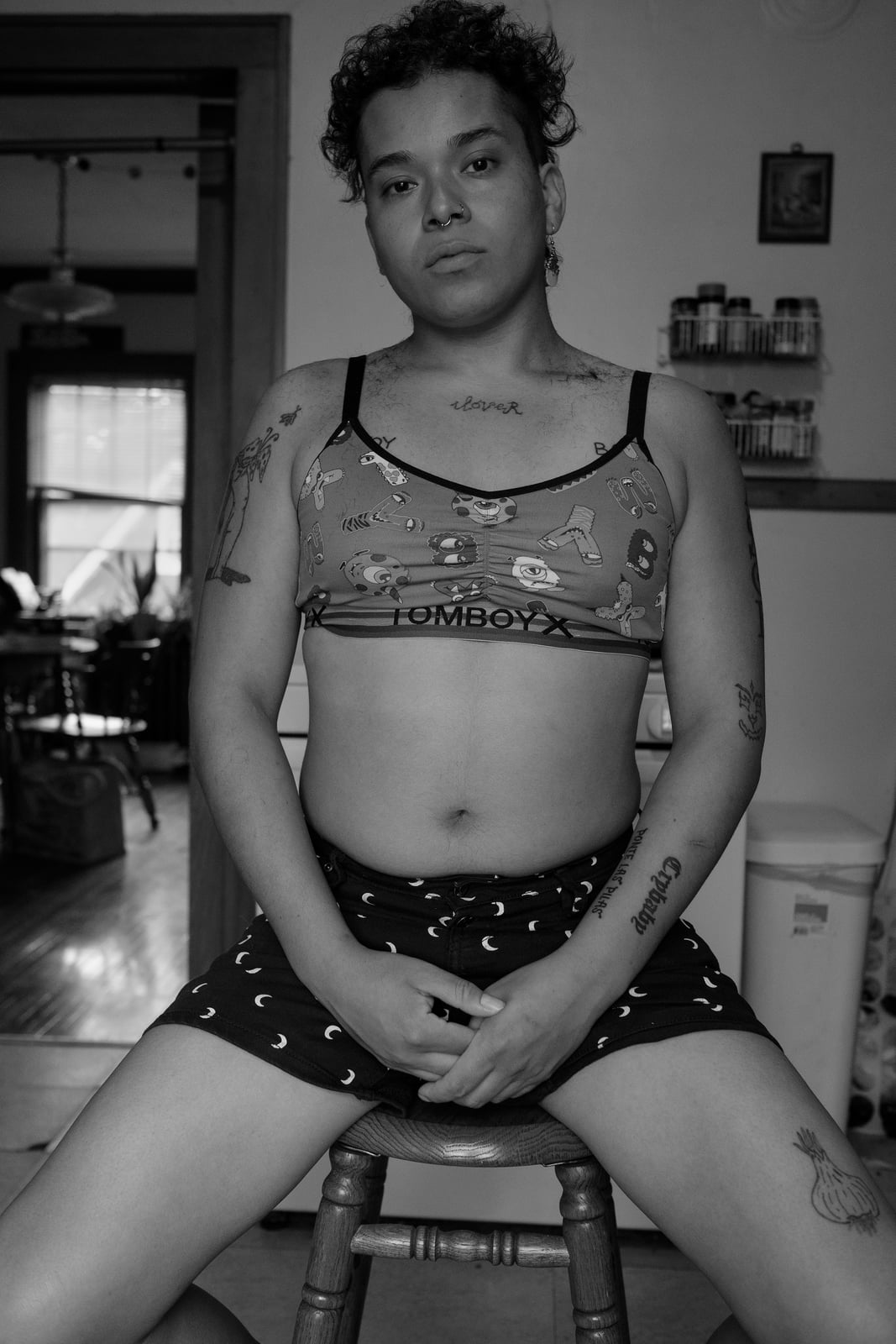
Nel in their kitchen after I gave them a haircut. Minneapolis, MN. 2024 — Brooklynn T. Kascel
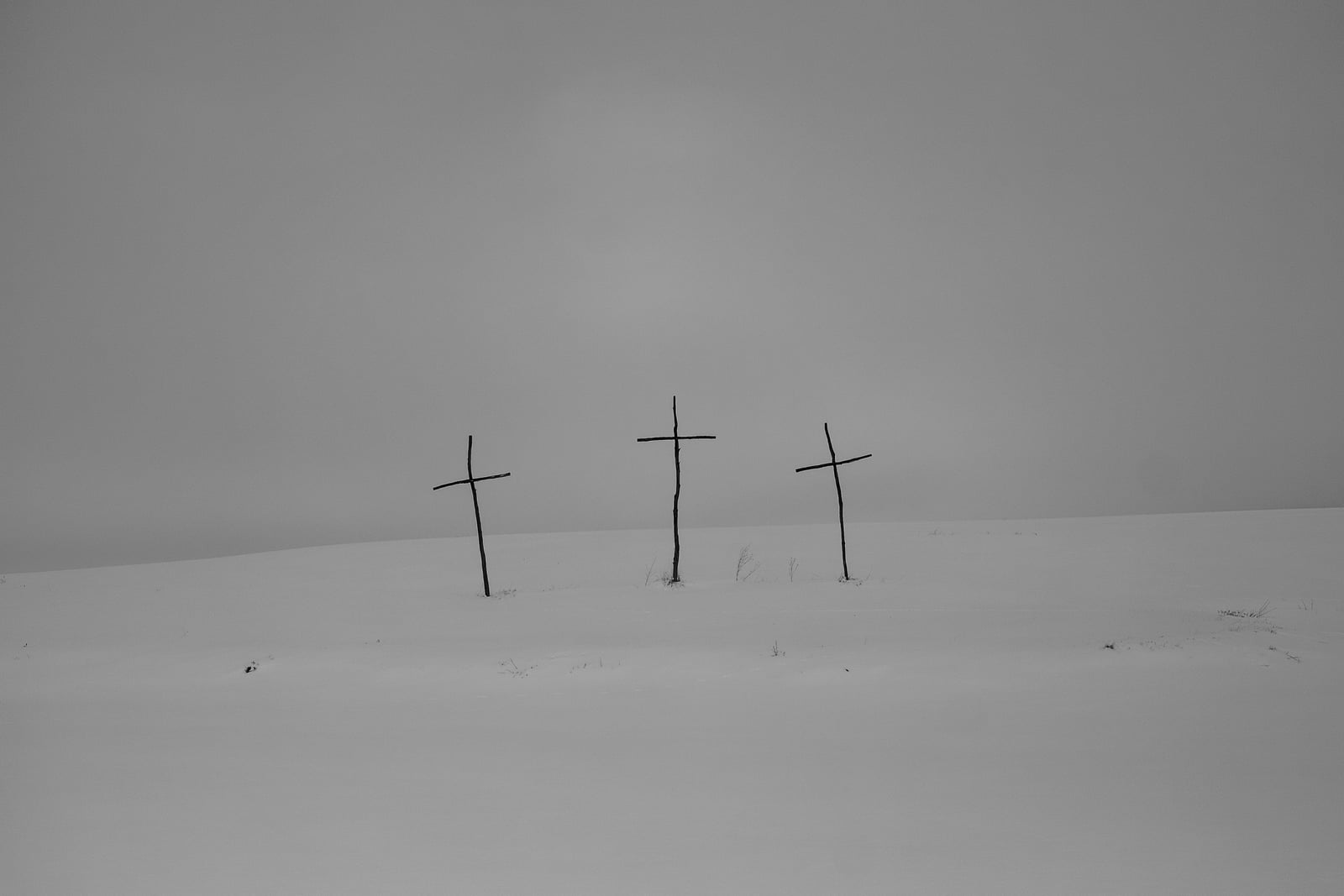
Three crosses in the middle of nowhere. Iowa. 2021 — Brooklynn T. Kascel
Erin Kirkland
As 93-year-old Norma Precht says, "This house is old, but it's our home."
King's Daughters is the oldest, single-owner nursing home in Missouri — and it's only for women. Founded in 1905, the halls are filled with residents' golden glamour shots from what seems like a different life. Although these women are in their winter stages, there's still life within, along with a sense of sisterhood and community.
Like many Midwestern towns, Mexico, Missouri (pop. 11,500) is a company town built around an industry that no longer exists. When brick manufacturing left, so did the economic stability.
As a lifelong Michigander with deep family roots in Detroit, I’ve heard and seen this story before. Industry comes, industry leaves, and entire communities are written off.
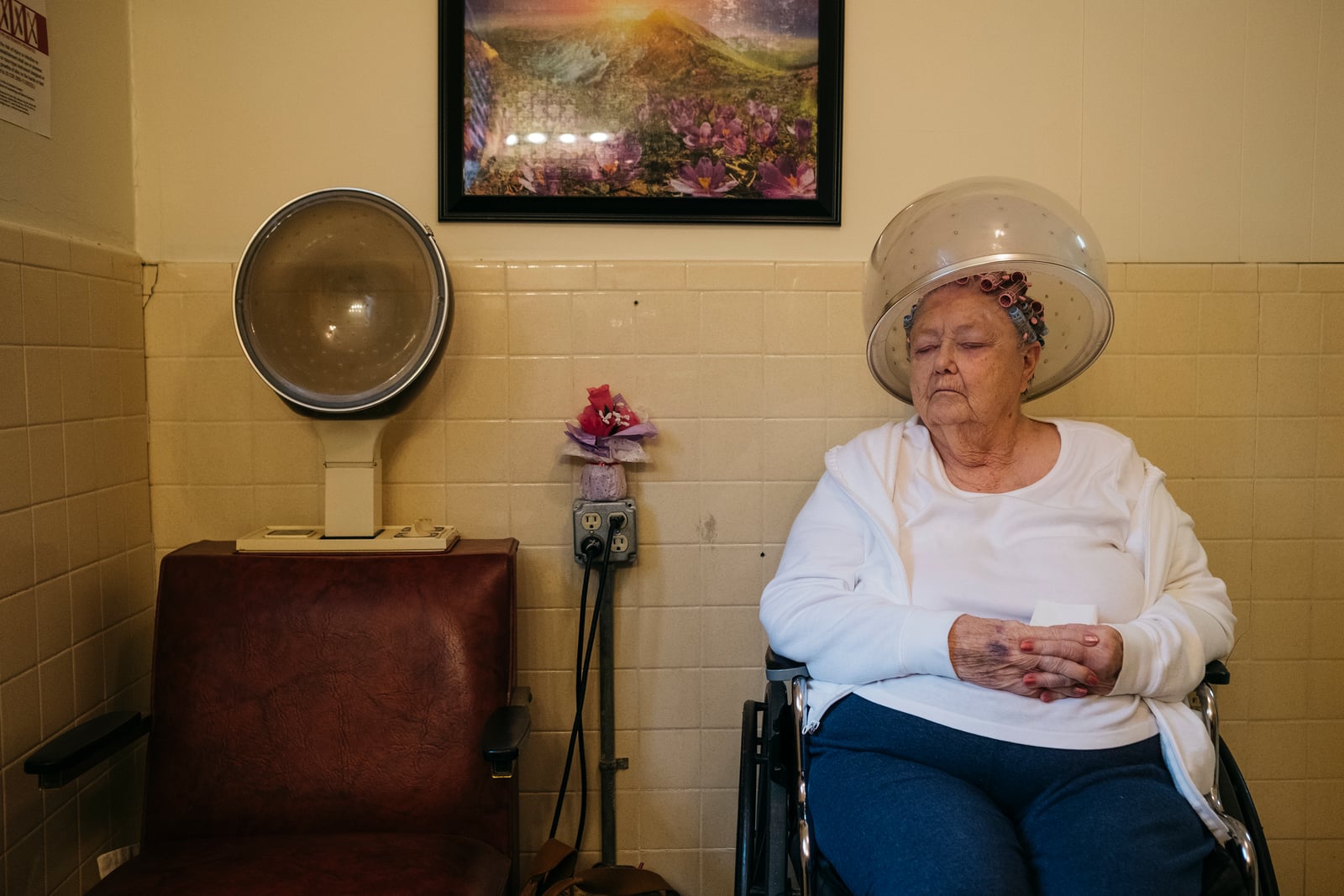
Helen Estes, 89, sits under the dryer while getting a perm. Hairdressers come to the home twice a week. — Erin Kirkland
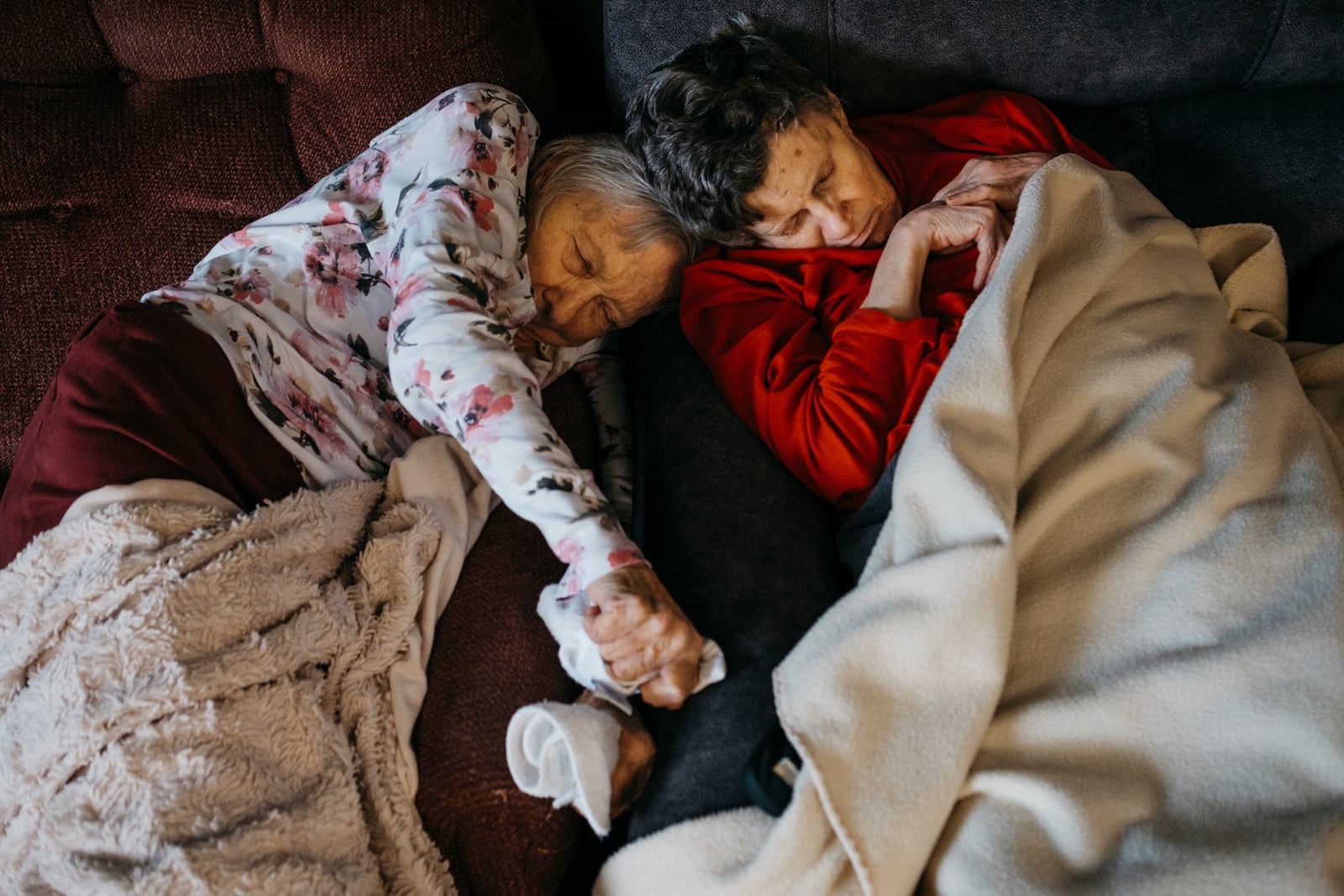
Jane Brooks, 87, left, and Patricia Brown, 69, rest together. — Erin Kirkland
Zun Lee
Father Figure counters the persistent myth of the absent Black father by documenting the quiet, daily realities of African American men and their children. In a cultural landscape often fragmented by polarizing narratives, this project rejects statistical distortions in favor of the ordinary.
From 2011 to 2018, Zun Lee immersed himself in various families across the United States and Canada to witness and document routine, unglamorous moments - braiding hair, navigating bedtime, playing in parks, and comforting toddlers. Building these close-knit, trusted relationships helped Lee reclaim his personal experience with paternal absence and presence.
Collectively, the work reframes a conversation around Black fatherhood that remains trapped in reductive tropes and social media memes. The images do not romanticize or overcompensate. Instead, they focus on the texture of the everyday, stripping away decades of media bias through steady, lived representation. By centering the unremarkable yet vital labor of daily caregiving, the work resists the divisive rhetoric that weaponizes family structures to alienate communities. It anchors the exhibition's themes not in political abstraction, but in the tangible spaces of American household life.
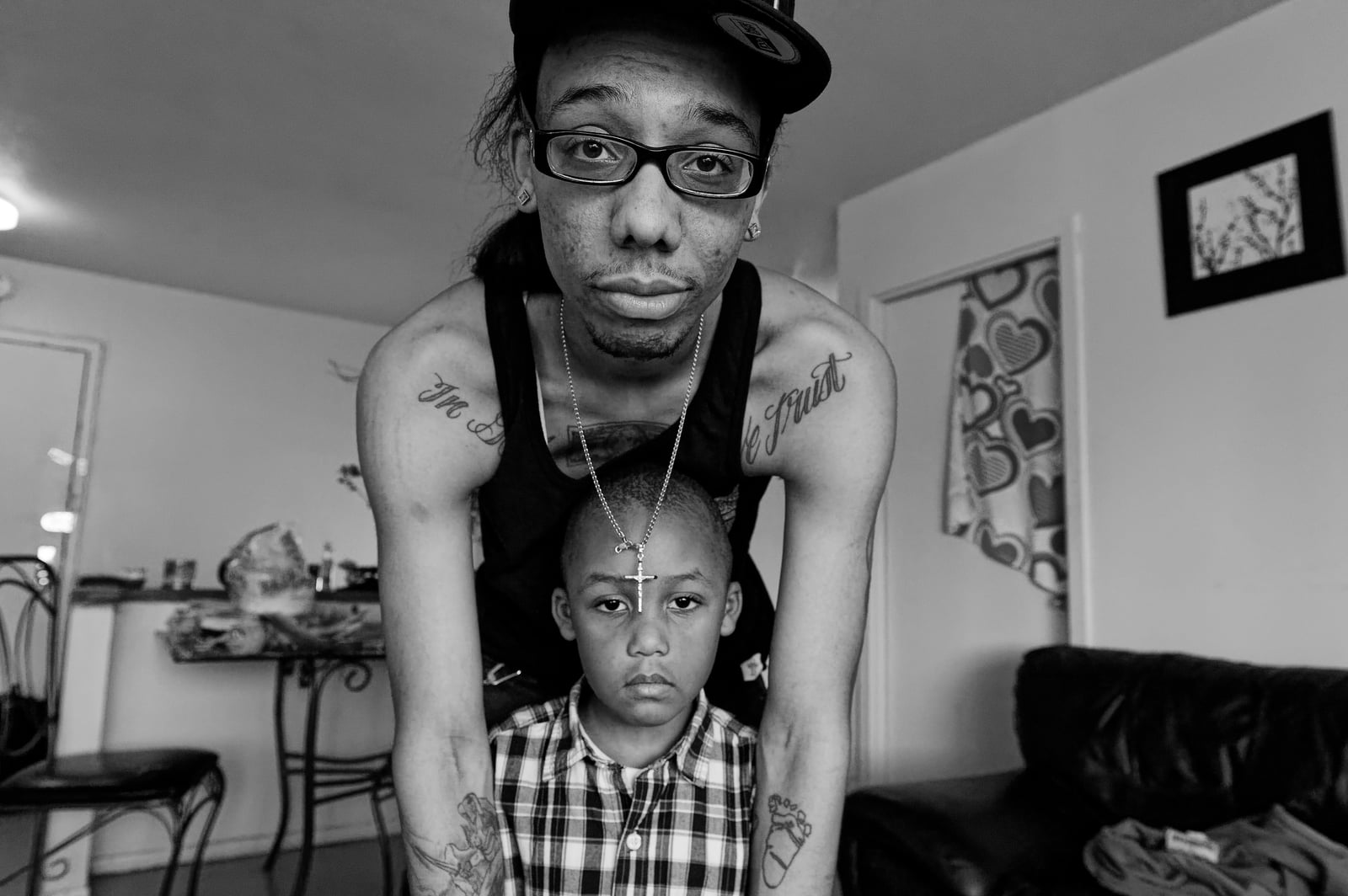
Alfredo Gonzalez and son Jahlil. Bronx, NY, 2011. — Zun Lee
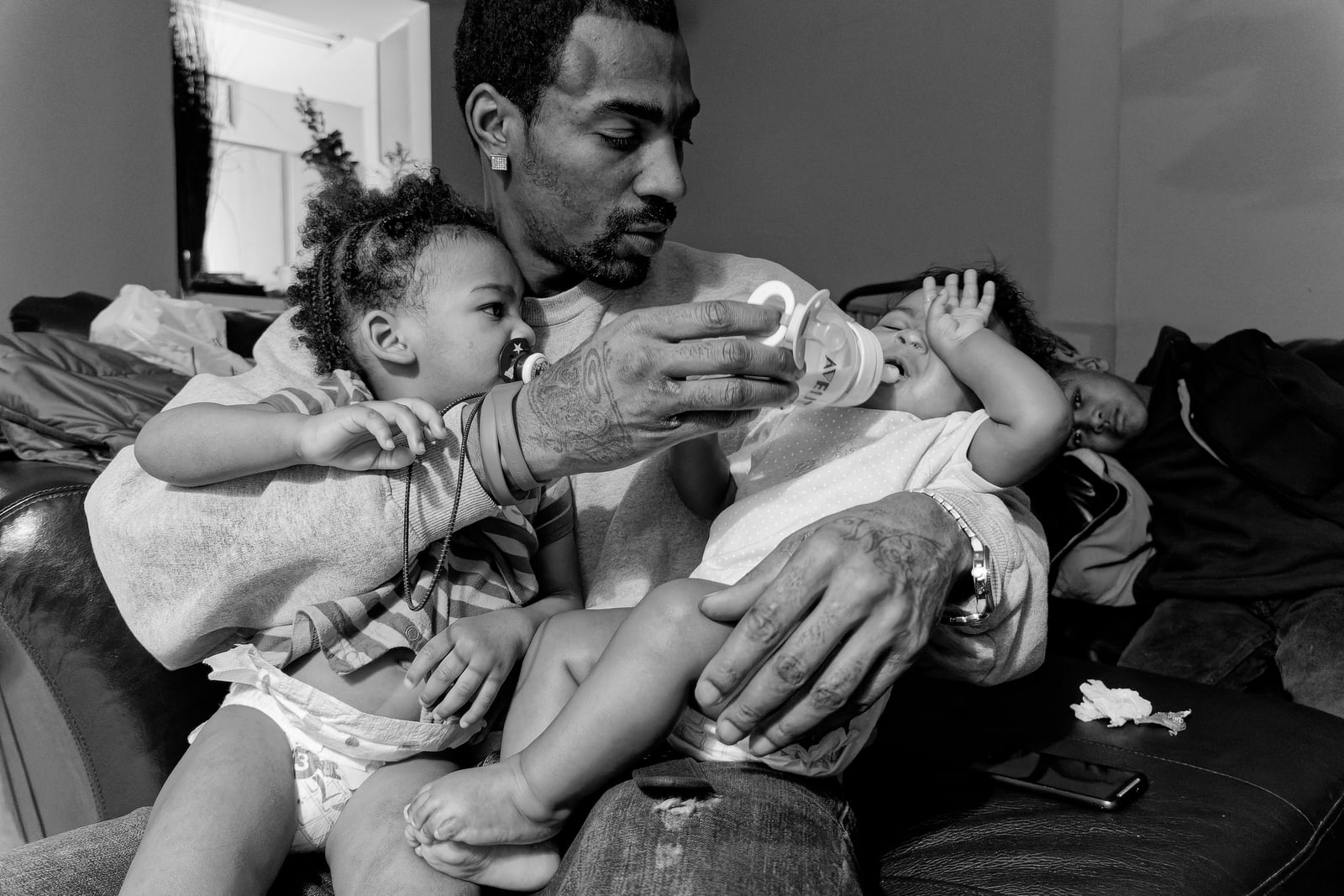
Christmas Eve with the Millers. Bronx, NY, 2012. — Zun Lee
Jon Lowenstein
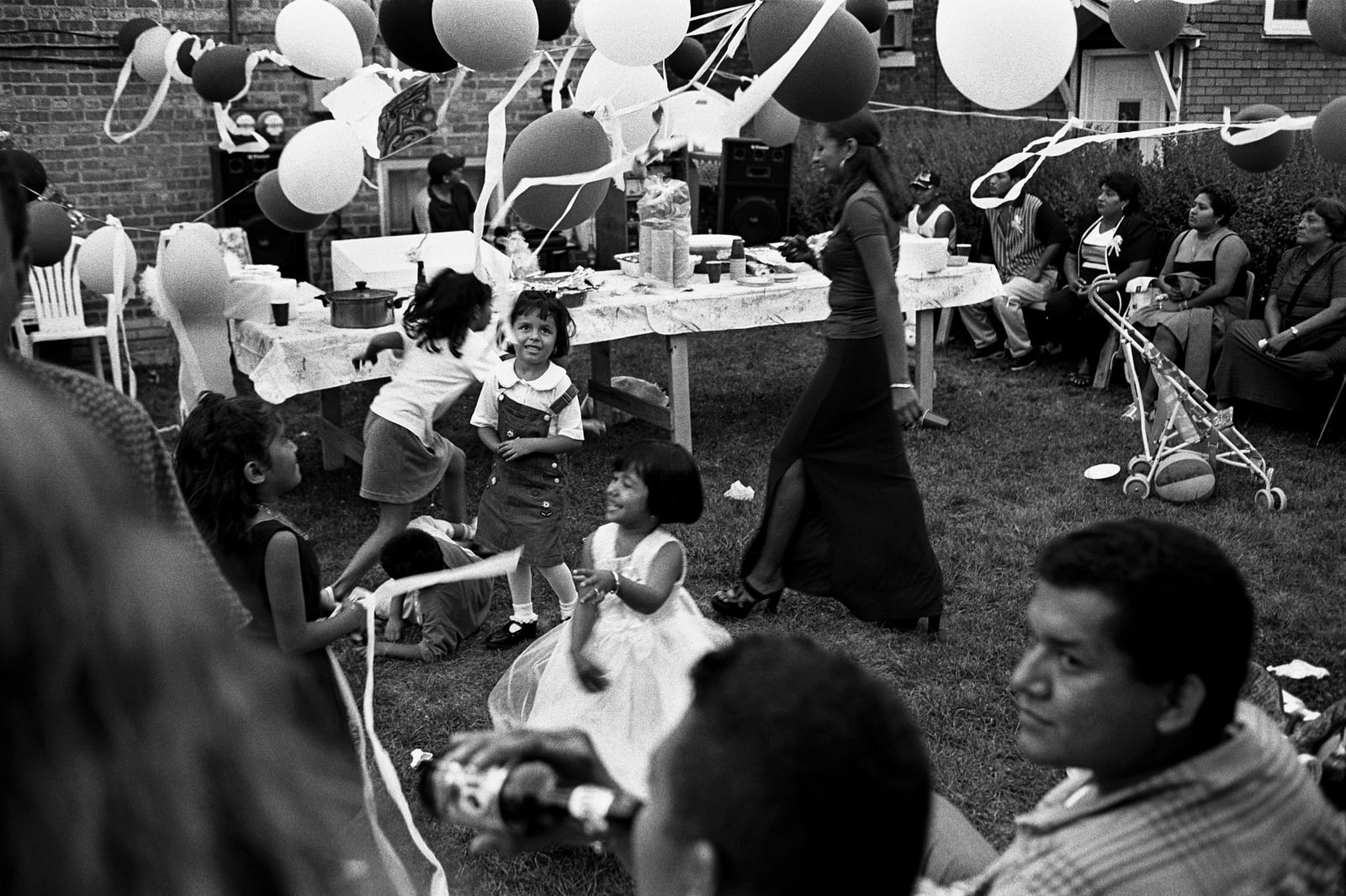
Birthday Party at Leo household. Back of the Yards, South Side of Chicago, Illinois, United States, 2000/01. — Jon Lowenstein
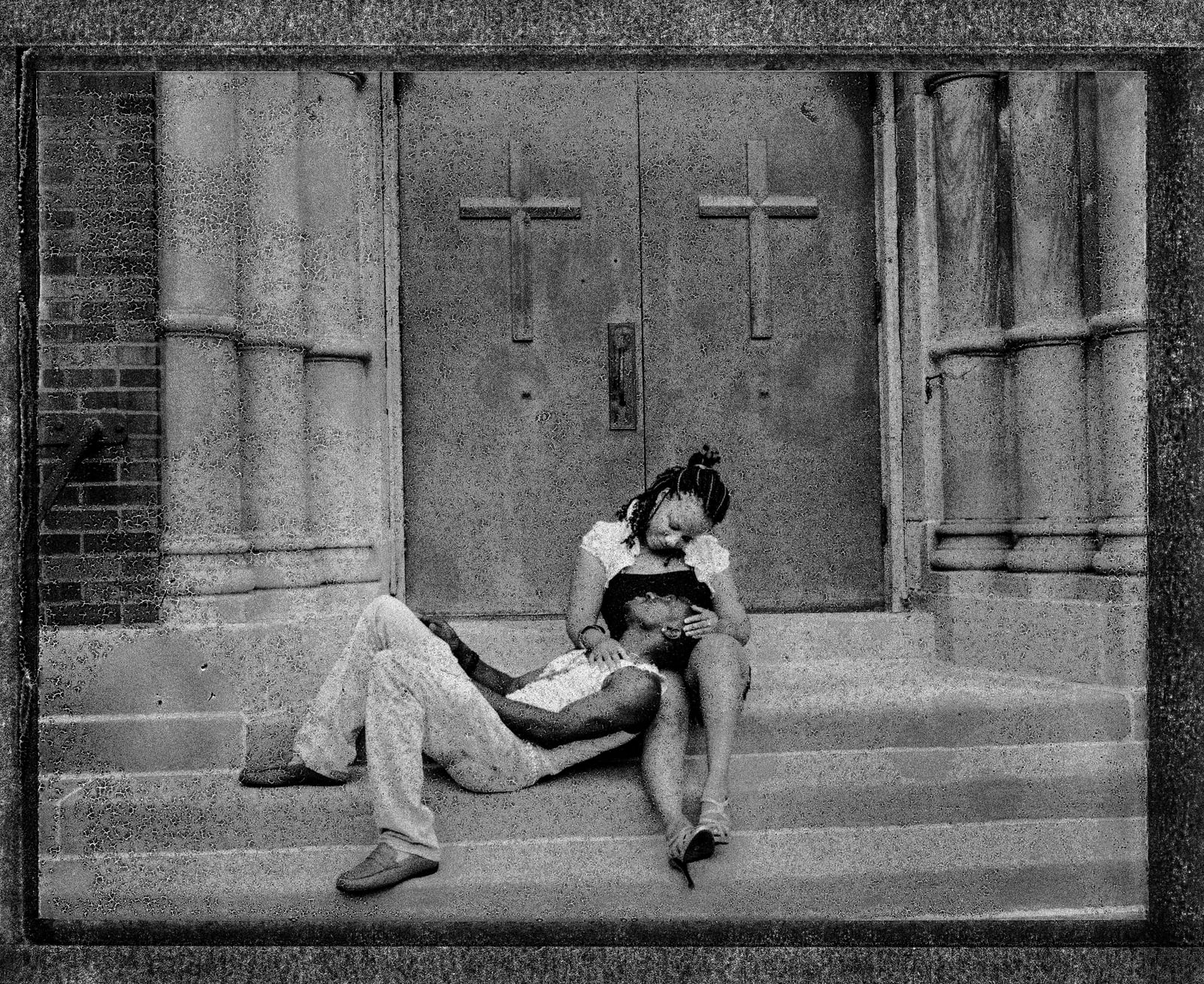
A couple re-enacts Michelangelo's Pieta on the steps of a South Side church during a friend's wedding. The couple asked me to come outside and photograph them in this pose. — Jon Lowenstein
Carlos Javier Ortiz
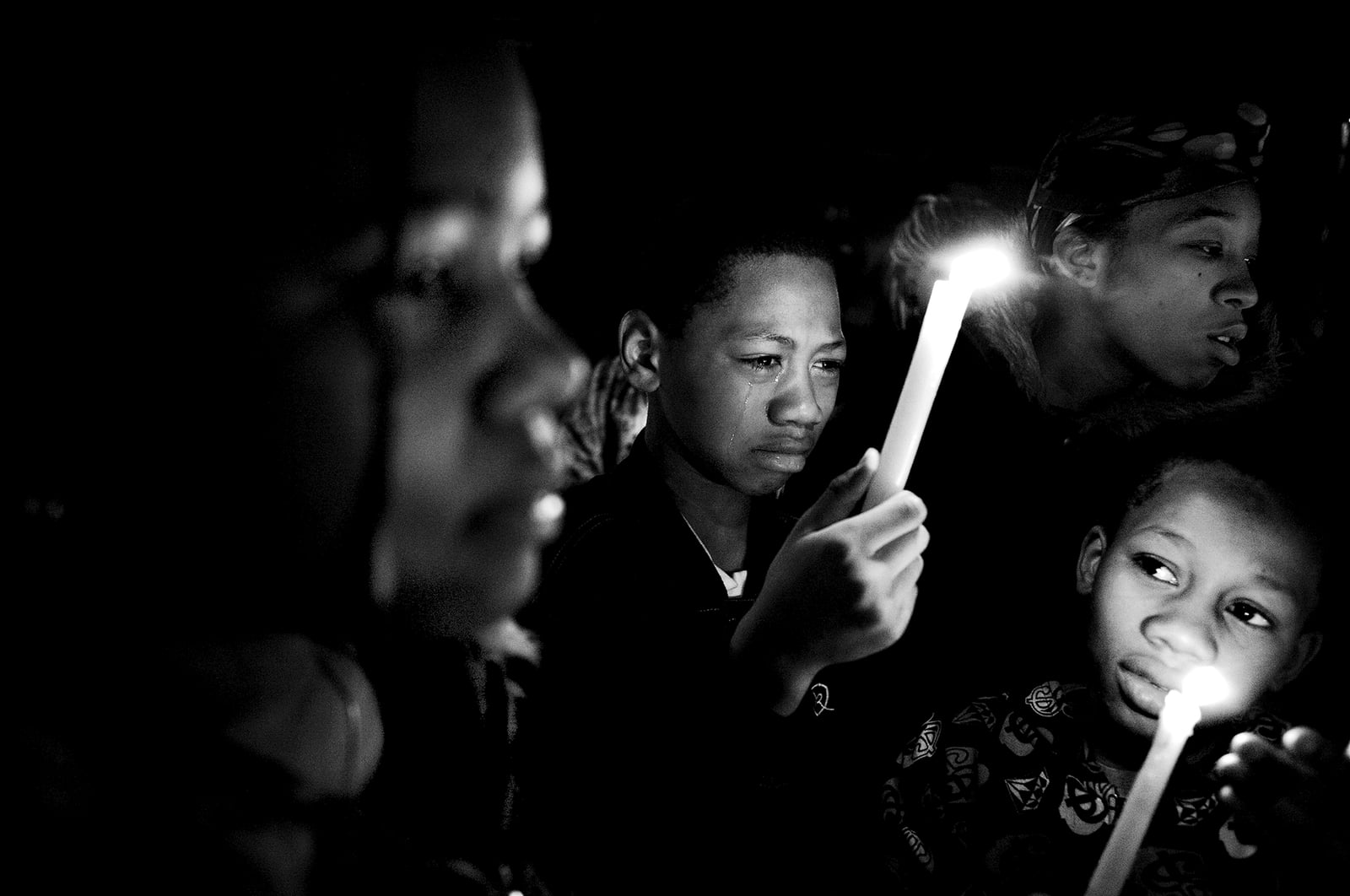
Albert Vaughn was the neighborhood guardian, the older teenager who would play ball with the younger kids and try to keep them safe from trouble. About 50 of his friends and family members gathered to remember “Lil Al” on the block where he was killed. Englewood, Chicago, 2008. — Carlos Javier Ortiz / Redux
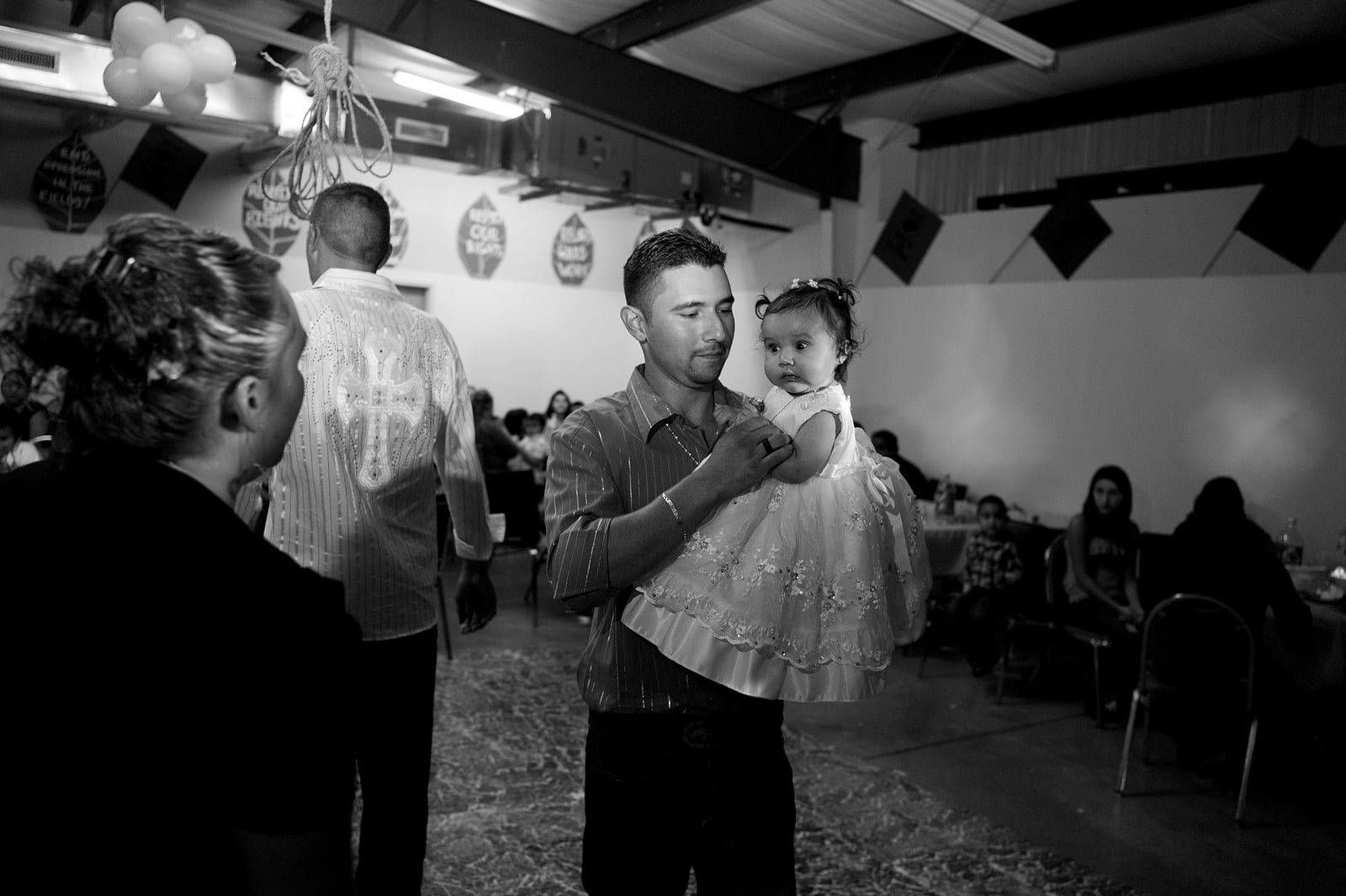
*Dudley, North Carolina September, 2011
A family during a party of a one-year girl at the Farm Labor Organizing Committee office in Dudley North Carolina. — Carlos Javier Ortiz / Redux*
Stay with the work.
New essays, delivered when they’re ready.