Dispatch
Machine Vision: Notes from the Dialogue Project
I have been showing my archive to a language model. This is not a sentence I expected to write ten years ago, or even five. But here we are: I upload photographs, I describe them or sometimes do not describe them, and the AI responds with observations, questions, interpretations that are sometimes obvious and sometimes startling.
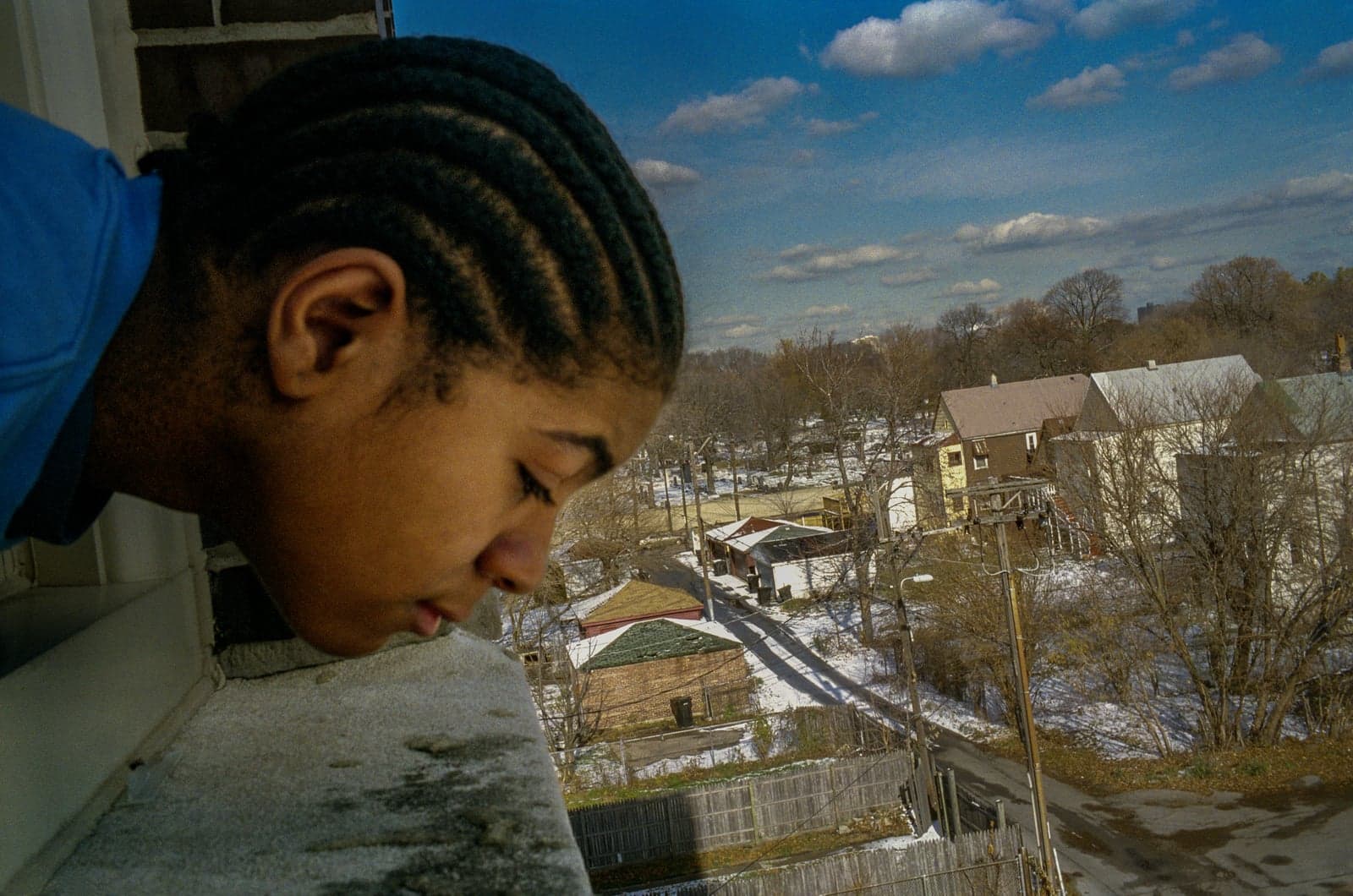
First: the AI does not see the way I see. This seems obvious but its implications keep opening up. I see a photograph of a man on a street in Chicago in 2011 and I see everything I know — about the neighborhood, about what happened the week before I took it, about the three conversations that preceded it. The AI sees the image, full stop. What is actually in the frame. This turns out to be clarifying.
Second: the AI is a good reader of formal qualities that I have become too accustomed to seeing. It notices the direction of light. It notices repetition across frames. It notices when my composition has a habit. These are things I know intellectually but have stopped actively thinking about, because they have become part of my practice. The AI reminds me to think about them again.
Third: the AI asks questions I would not think to ask, because I assume I already know the answer. "What were you looking for when you took this?" is a question any editor might ask. But "What were you not looking for?" is different. Not because it is more profound, but because it approaches the archive from outside my assumptions about why I was there.
The dialogue project began as an experiment in whether AI could be a useful interlocutor for documentary photography. I think it can, with important caveats. The AI cannot understand stakes the way a person does. It cannot feel the weight of an image the way someone who has grieved can. It does not have a body that has been cold or afraid or moved. These are not small caveats.
But what it can do is read the image without my autobiography obscuring the view. It can describe what is actually there rather than what I remember being there. And sometimes — not always, but sometimes — it sees something I have been carrying in the archive for years without fully understanding.
That is enough reason to keep talking.
Images from this essay
All photographs are rights-managed and available for editorial licensing or as fine-art prints.
Stay with the work.
New essays, delivered when they’re ready.