Chicago's Enduring Pulse
Amidst the city's vibrant streets, a constant negotiation unfolds between celebration and sorrow, community and systemic struggle.
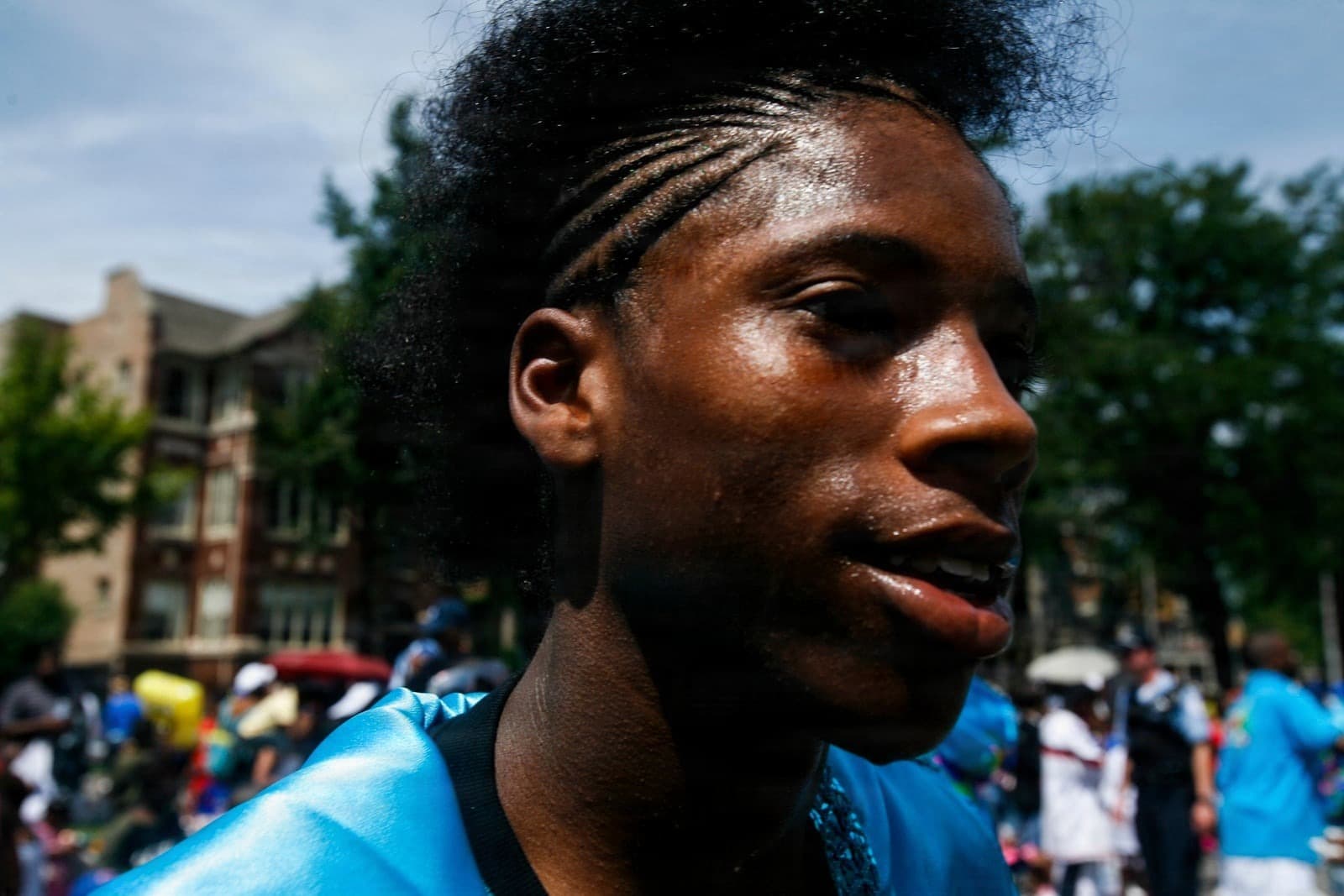
The August heat hung heavy on the streets of Chicago, but a different kind of energy pulsed through the air. A young person, their face glistening with sweat, cornrow braids catching the direct sunlight, embodies this vibrant spirit. Dressed in a bright blue, satin-like costume, their open mouth suggests a shout, a song, or a deep breath drawn in the midst of celebration. This is the Bud Billiken Parade, captured in 2007 (Image 1), a cherished annual event where the city's African American community gathers to celebrate youth, culture, and enduring life. The blurred backdrop of trees, brick buildings, and a diverse crowd, including a figure in a police-like uniform, hints at the broader urban fabric — a fabric often woven with threads of both joy and profound challenge.

The Weight of the Street
Yet, the very streets that host such vibrant celebration also bear witness to a heavier truth. Only a few years later, in 2014, the lens turns to an abandoned lot at 79th and Muskegon, a stark contrast to the parade's exuberance. Here, a man lies dead (Image 2), his silent form illuminated by a police car's beam. The photographer, drawn to the scene, is met not with answers, but with a chilling rebuke from an officer: “The photographer took his picture with a flash and killed the man lying on the ground.” This visceral encounter underscores the raw, often unacknowledged, toll of urban violence and the strained relationship between community and authority. It is a death in plain sight, yet its narrative is immediately contested, shrouded in a defensive, almost surreal, blame.
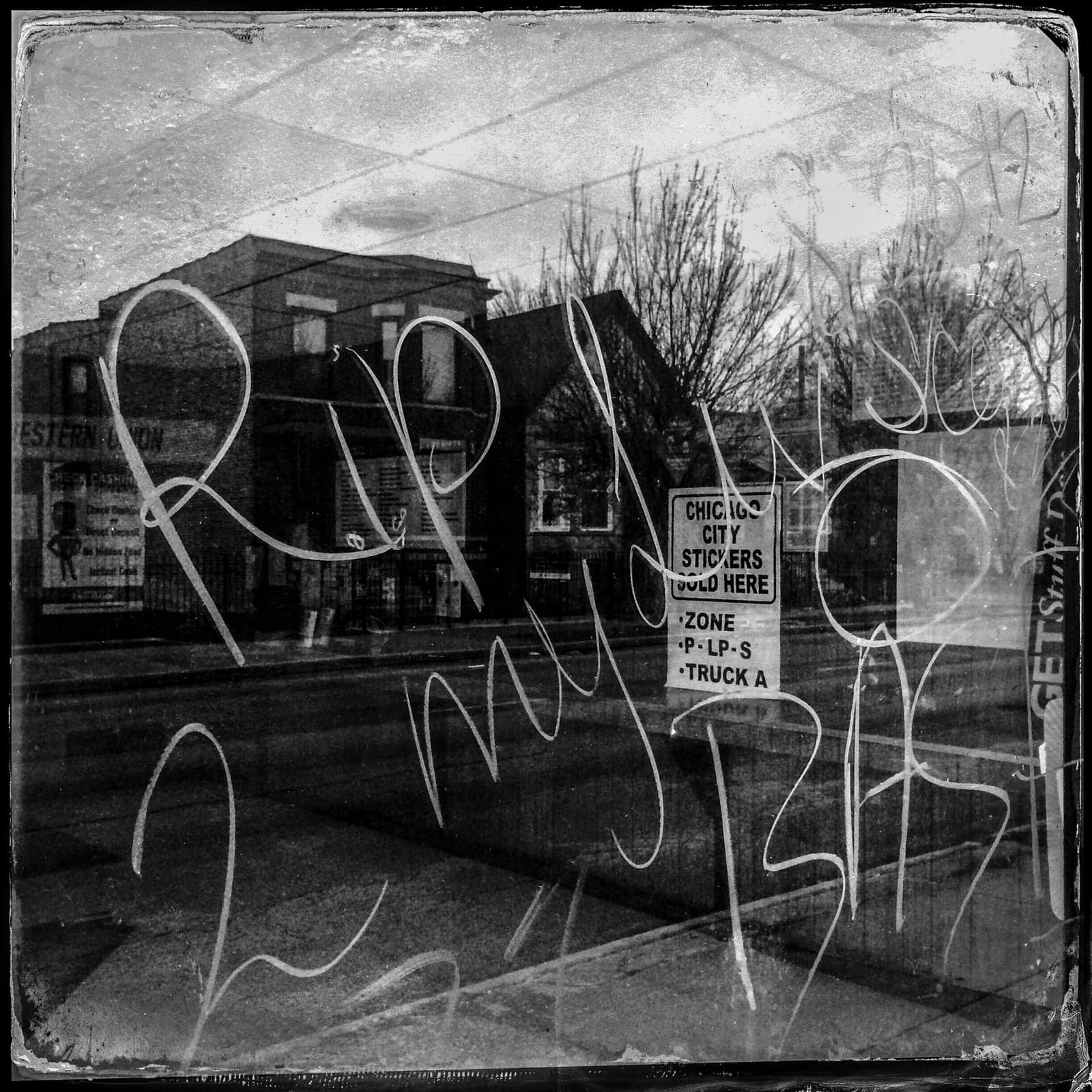
This quiet tragedy is echoed across the city. In Woodlawn, a handwritten “RIP” sign adorns a vacant storefront in 2014 (Image 5), a simple, poignant memorial to a life, or perhaps many lives, lost. These are not isolated incidents but part of a pervasive undercurrent of grief that runs through Chicago's neighborhoods, marking spaces with absence and memory.
Structures of Disadvantage
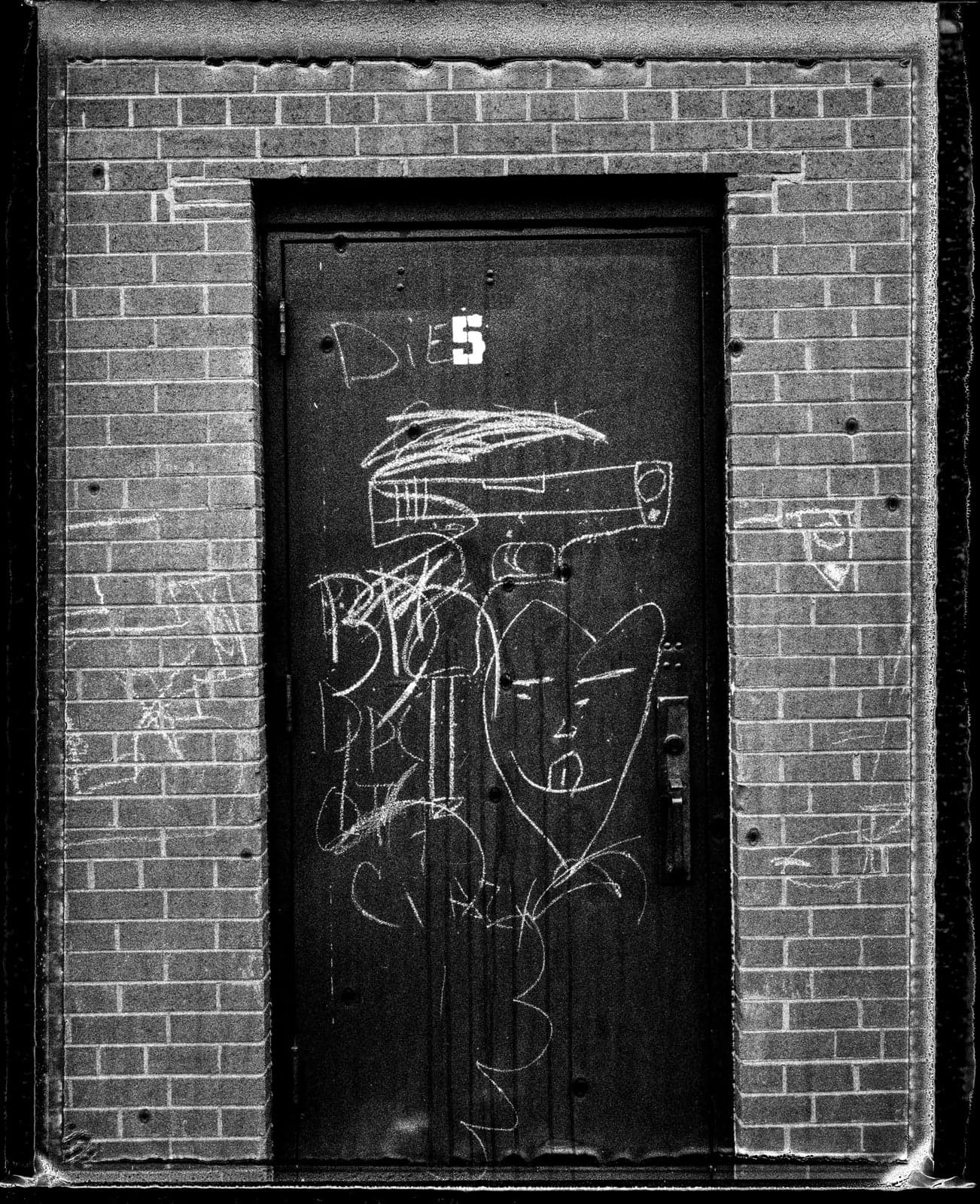
The challenges extend beyond individual acts of violence to the very structures that shape daily life. In 2009, the back of the recently closed Guggenheim Elementary School in Englewood is defaced with gang graffiti (Image 4). This isn't just vandalism; it’s a visible scar left by policy decisions, as public schools are shuttered, their students dispersed, and their buildings repurposed or left to decay. The caption notes the ongoing debate over school reform, but for the communities impacted, these closures represent a tangible loss of a neighborhood anchor, a place of potential and learning, now overtaken by the territorial markings of despair.
Further south, the looming facade of the Cook County Jail in Chicago's Little Village neighborhood (Image 3) stands as a monumental testament to another pervasive system. In 2009, it was one of the largest county jails in the United States, a vast institution that casts a long shadow over the lives of countless families and communities. It represents the ultimate consequence of systemic failures, a place where many end up, often from the same neighborhoods grappling with school closures and street violence.
Under the Ghetto Bird
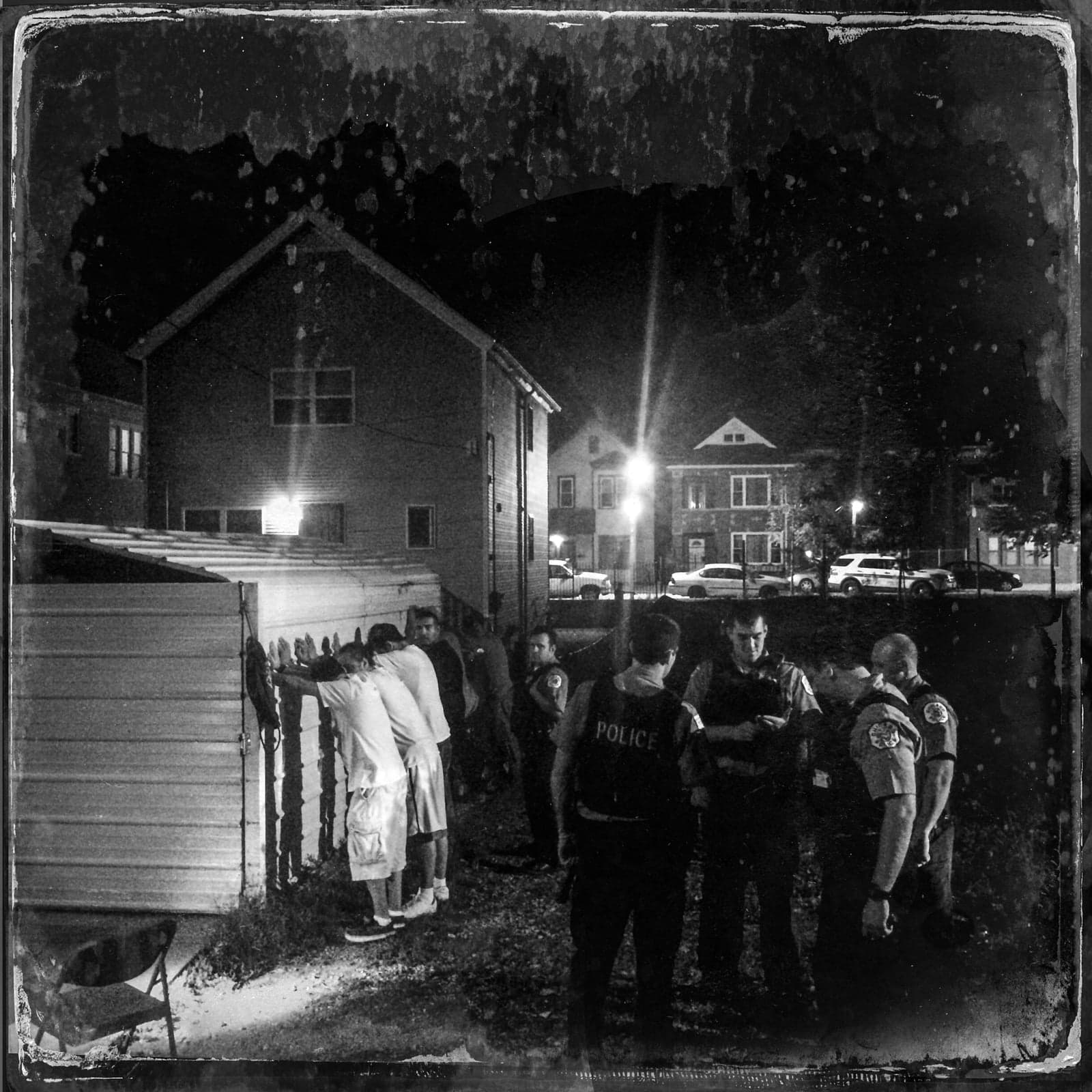
The presence of authority is not just static, like the jail, but often dynamic and confrontational. In 2014, the photographer notes the “Ghetto Bird aka Chicago Police Helicopter” circling above the South Side (Image 7). Sirens blare, and the street becomes a stage for repeated encounters: “black and brown guys against the cop cars being questioned.” Lowenstein describes the difficulty of documenting these moments, the tension of approaching an unfolding scene where individuals are vulnerable against the “jackknifed two or three deep” police presence. When he asserts his role as “the press,” he is met with flashlights and a warning: “You'd better be careful cause those guys said they don't like their picture being taken!” It's a complex dance of power, suspicion, and the urgent need to bear witness, a “play that happens over and over again each night and day,” as the photographer observes.

A Resilient Roar
Yet, against this backdrop of systemic pressure and pervasive violence, the spirit of community and resistance endures. In 2014, Jedidiah Brown organized a powerful anti-violence march in the South Shore neighborhood (Image 6). He borrowed several coffins from a local funeral home, transforming symbols of individual loss into a collective statement, leading more than 400 people through the streets. This act of collective mourning and protest is a forceful reclamation of public space, a defiant demand for change. It is a moment where grief becomes a catalyst for action, where community members refuse to be silent witnesses to the ongoing toll of violence.
Chicago's streets, as these photographs reveal, are a complex tapestry of human experience. They are where the exhilaration of a parade meets the quiet horror of a dead body in an empty lot, where the promise of education gives way to the despair of closed schools, and where the heavy hand of policing is met by the determined step of activists. It is a city of enduring contrasts, where the pulse of life, in all its forms—joy, sorrow, struggle, and resilience—beats on, shaping and reshaping the urban landscape with every passing moment.

Images from this essay
All photographs are rights-managed and available for editorial licensing or as fine-art prints.
More in Essay
Stay with the work.
New essays, delivered when they’re ready.