Dignity in the Margins: Reframing Labor and Belonging
From a solitary protest in the rain to a communal wedding, Jon Lowenstein's photographs reveal the profound human efforts to build and sustain community against the currents of migration and economic precarity.
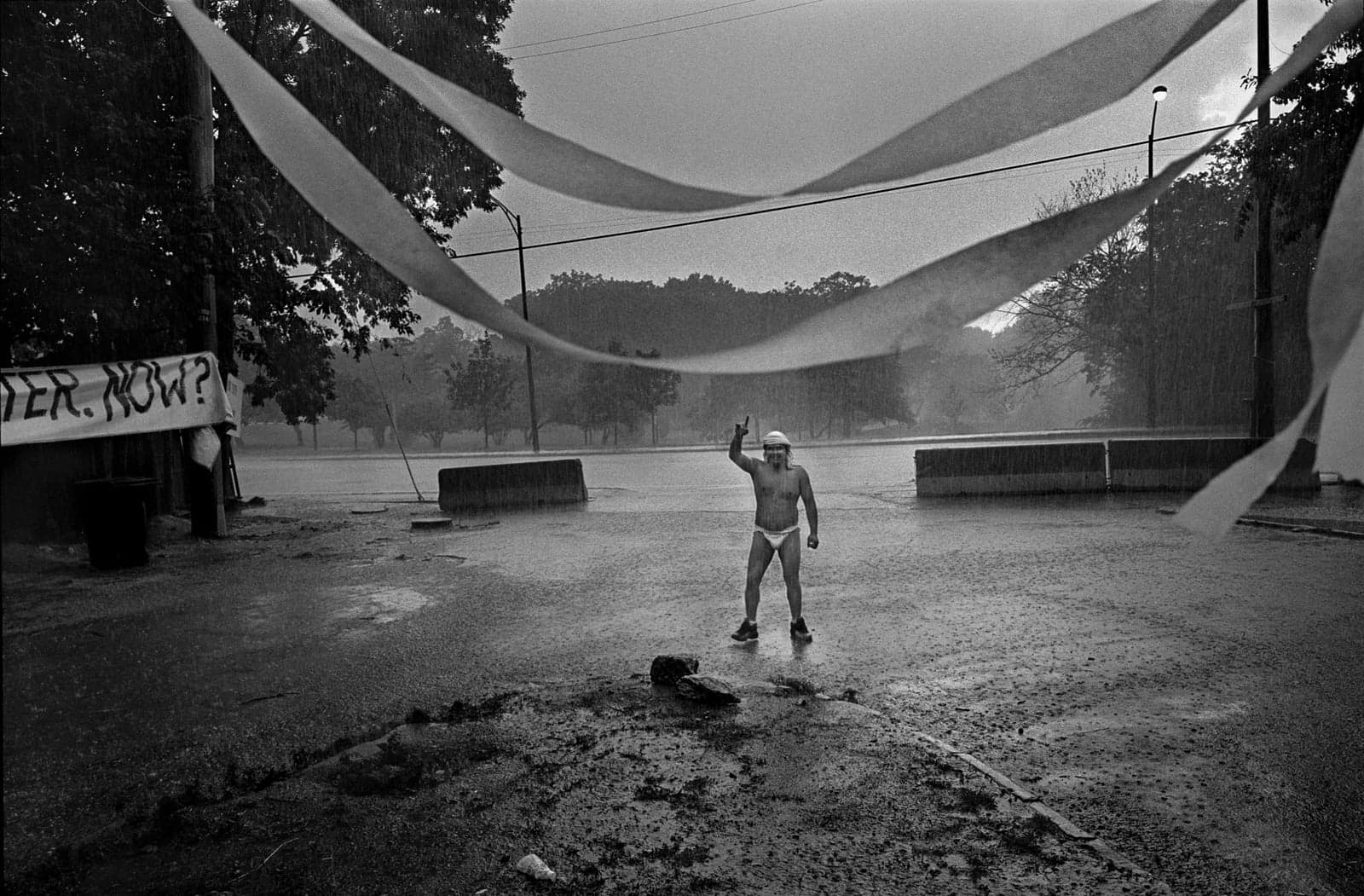
The rain, a relentless curtain, slicks the asphalt of a parking lot in Albany Park, Chicago. In the center of this makeshift stage, a man stands exposed. Tomas, a day laborer for over a decade, has stripped down to his underwear, his body a raw declaration against the indifferent sky, against the alderman who fought the workers, against the anonymity of his labor. Jon Lowenstein’s lens captures this profound act of vulnerability and defiance, a moment where a single human form becomes a monument to a collective struggle for dignity.
The Weight of Unseen Labor
Tomas's stark image, taken in 2003, is not merely a portrait of a man in the rain; it is a visceral testament to the arduous fight for the Juan Diego Workers’ Center. For three years, workers like Tomas battled for a safe, dignified space to seek employment, a place that would stand as a bulwark against exploitation. His nude posture, he insisted, was to show his deep connection to the center, a bond forged in shared hardship and the relentless pursuit of basic rights. It is a powerful articulation of a body politic, where the individual’s physical presence, stripped bare, symbolizes the collective’s demand for recognition and humanity in the face of systemic resistance. This photograph, taken a year before the center finally opened, speaks to the immense personal and communal cost of labor often deemed 'illegal' or 'alien,' yet undeniably essential to the urban fabric.

Distant Shores, Enduring Roots
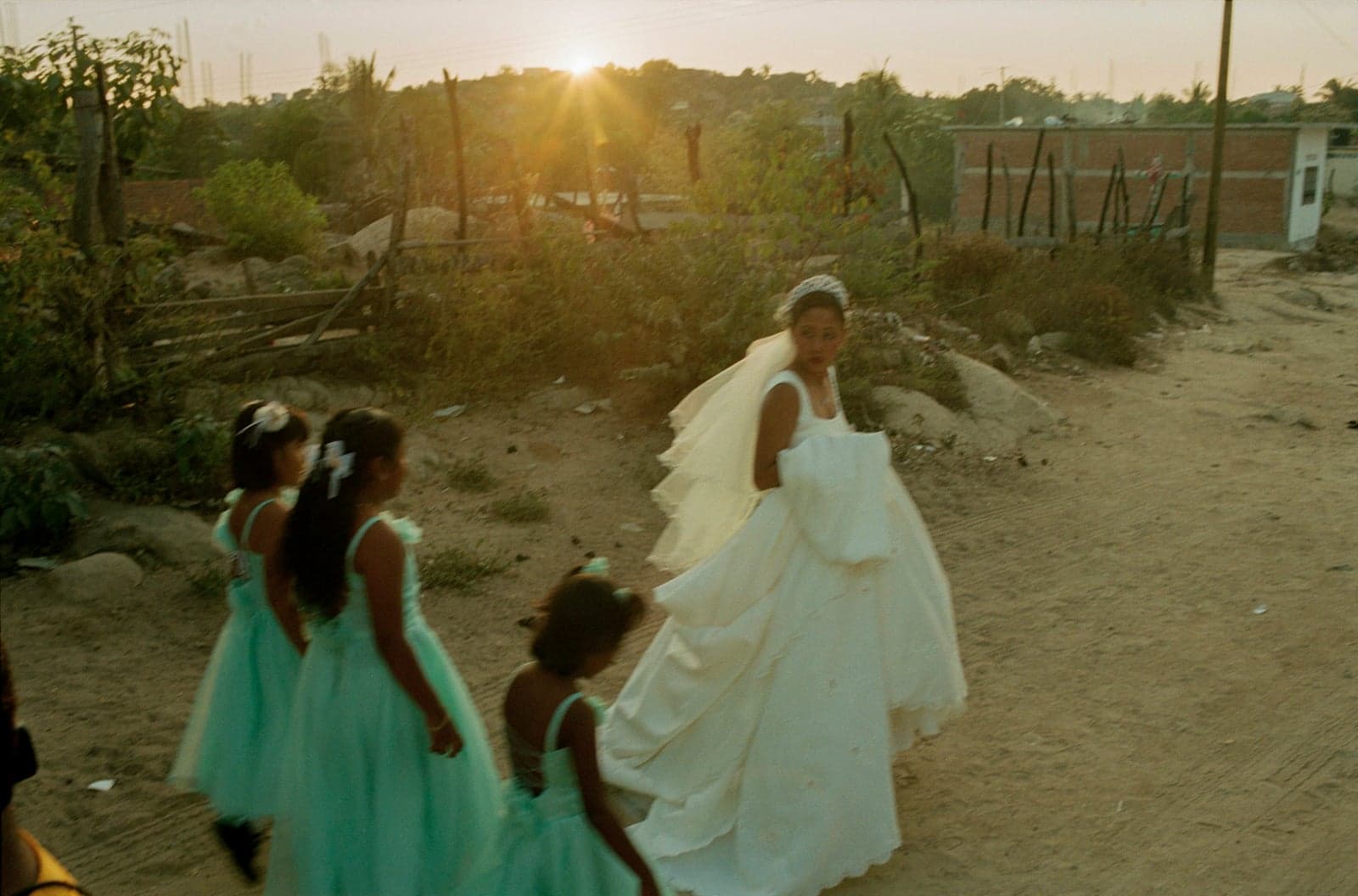
Across continents, in the sun-drenched landscape of Copala, Guerrero, Mexico, another narrative of labor and belonging unfolds. In 2001, Concepcion Nino walks to her wedding, her white dress a luminous counterpoint to the dusty road, a symbol of hope and new beginnings. This is not just a personal celebration; it is a profound community event, funded by five years of strenuous work and savings in the United States. Conchi and her husband Juan meticulously saved $10,000 USD, a sum that speaks volumes about their dedication and the sacrifices made far from home. This capital, earned in the fields or factories of a foreign land, is repatriated not just as money, but as a reaffirmation of roots, a grand gesture of reinvestment in the very fabric of their hometown. Over six hundred people gathered, a testament to the enduring power of familial and communal ties, strengthened, rather than severed, by the currents of migration. The 'dirty' quality of the image, as noted in the keywords, might speak not to grime, but to the earthiness of tradition, the journey taken, and the deep connection to the land itself.
Sanctuaries of Shared Experience
Yet, not all gatherings are public protests or grand celebrations. Many vital acts of community building unfold in quieter, less visible spaces, often on the margins of the dominant gaze. Lowenstein’s lens takes us into an intimate interior, where a group of men gathers under the watchful, garlanded gaze of the Virgin of Guadalupe. This framed icon, adorned with tinsel, is more than decoration; it is a spiritual anchor, a symbol of shared faith and cultural identity that binds these men together. One man’s 'shush' gesture introduces an element of discretion, perhaps reverence, or the quiet understanding that some bonds are forged in hushed tones, away from the clamor of the outside world. Here, resilience is cultivated not through overt struggle, but through shared spiritual solace and mutual support, a testament to the enduring power of faith in difficult lives, a sanctuary built not of stone, but of shared presence.
The Filtered Gaze
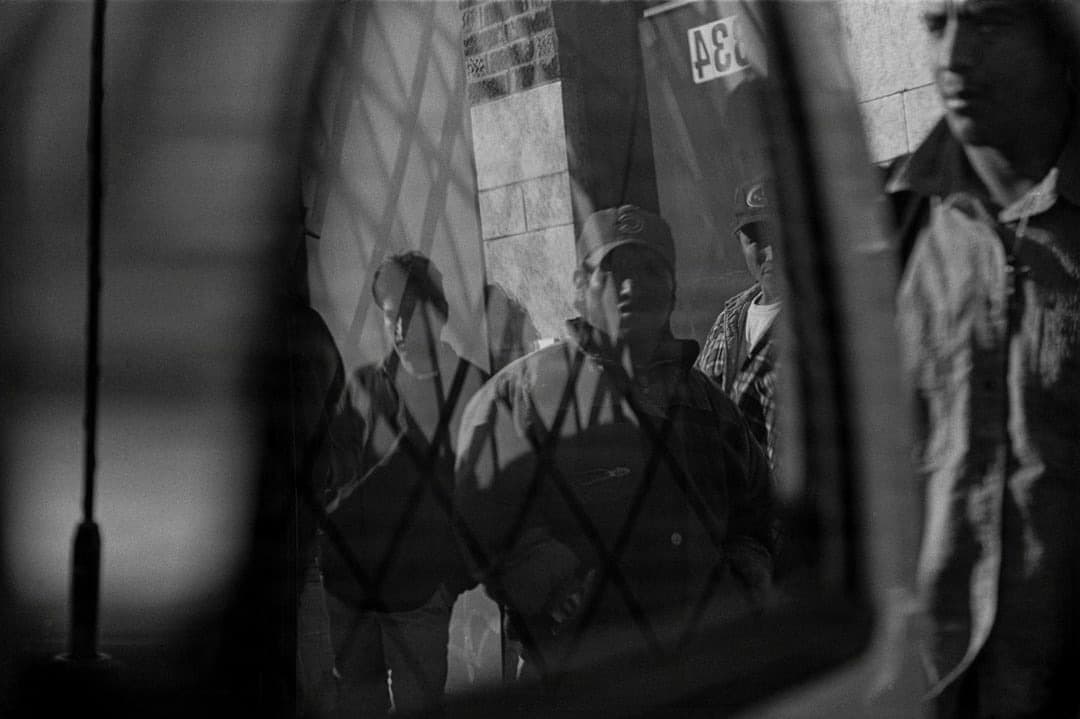
This sense of the 'unseen' or 'filtered' experience is further underscored in another image, where multiple men are observed through a distinctive patterned window or screen. The grid-like foreground partially obscures their faces, lending an air of anonymity. This visual barrier serves as a powerful metaphor for the way many migrant and marginalized communities exist within urban landscapes—present, yet often rendered anonymous, their individual stories diffused by collective perception, their humanity seen through a distorting filter. Yet, even with faces obscured, the collective presence is undeniable, a quiet assertion of existence. These are the urban dwellers, the essential figures whose daily lives and labors often underpin the structures of society, yet whose full humanity remains just out of clear view.
From Tomas’s defiant, naked stand in the Chicago rain, a demand for dignity and a center for his labor, to Conchi’s celebratory return to her Guerrero home, a reinvestment of distant earnings into enduring roots, and finally, to the hushed gatherings under sacred icons and the anonymous visages behind patterned glass, Jon Lowenstein’s photographs chart the complex, often arduous, journey of belonging. They reveal that dignity is not a given, but a claim — asserted in loud protests, celebrated in grand weddings, and quietly sustained in the intimate, unseen spaces of faith and community. These are the lives lived on the margins, not as peripheral figures, but as the very architects of resilience, perpetually negotiating their visibility, forever forging their place in an unfolding world.
Images from this essay
All photographs are rights-managed and available for editorial licensing or as fine-art prints.
More in Essay
Stay with the work.
New essays, delivered when they’re ready.