The Unfolding Play: Life and Loss on Chicago's Streets
In Chicago, the vibrant pulse of community celebration often echoes against the stark realities of violence, policing, and systemic neglect, revealing a city perpetually navigating its own profound contradictions.
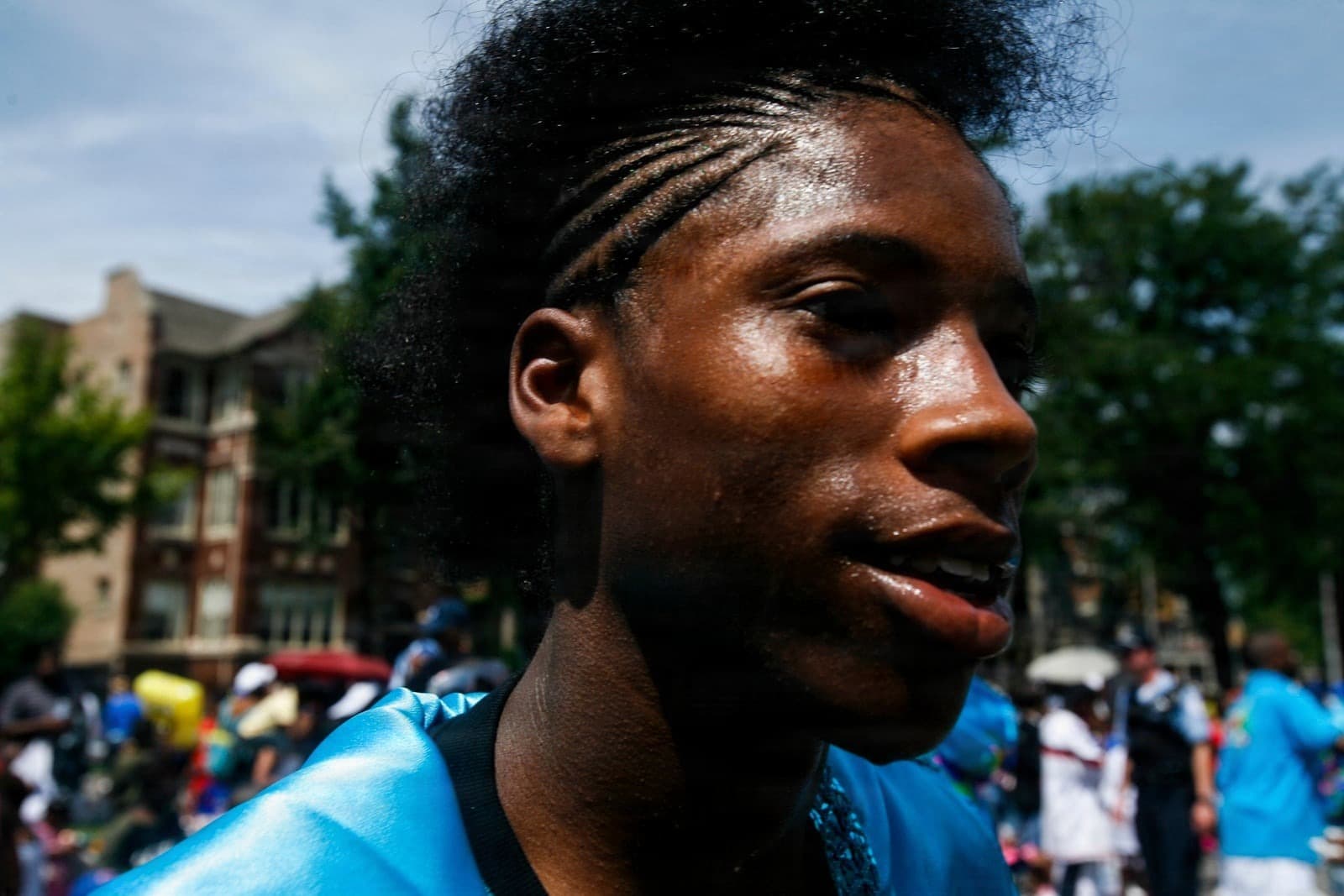
The August heat on Chicago’s South Side is a palpable force, a weight that presses down on asphalt and skin alike. Yet, in the midst of it, a young person in a brilliant blue, satin-like costume, their face glistening with sweat, looks out from the heart of the Bud Billiken Parade. Their cornrow braids are sharp against the direct sunlight, their mouth slightly open, perhaps in a shout of joy or a gasp for air, caught in the vibrant blur of a street scene alive with onlookers, green trees, and the distant architecture of a brick building. This moment, captured in 2012, is a burst of color and movement, a testament to community, culture, and the enduring spirit of celebration that pulses through the city.
But the very streets that host such jubilant processions also bear witness to a different, colder reality. Jon Lowenstein’s lens frequently finds itself in the liminal spaces where life abruptly ceases or is relentlessly constrained, revealing the profound contradictions that define Chicago. The city is an unfolding play, as Lowenstein himself notes, a drama of struggle and resilience enacted daily on its complex stage.

The Weight of the Pavement
Just two years after the Bud Billiken Parade image, the warmth of August gives way to the chill of February, and the scene shifts dramatically. In an abandoned lot at 79th and Muskegon, a police car’s beam cuts through the darkness, illuminating a man lying dead. The caption is raw, immediate: "I'm not sure if he was murdered or just died." The photographer, drawn to the scene, approaches the body, taking four or five pictures before being forcefully shooed away by officers. One officer, perhaps in a moment of gallows humor or profound weariness, suggests the photographer’s flash had killed the man. This chilling encounter, the cold enveloping the photographer upon retreating, speaks to a pervasive sense of abandonment and the casual brutality that can define urban existence. The dead man in the lot, unidentified and unmourned in the immediate frame, becomes a stark symbol of lives lost, often without explanation or public outcry.
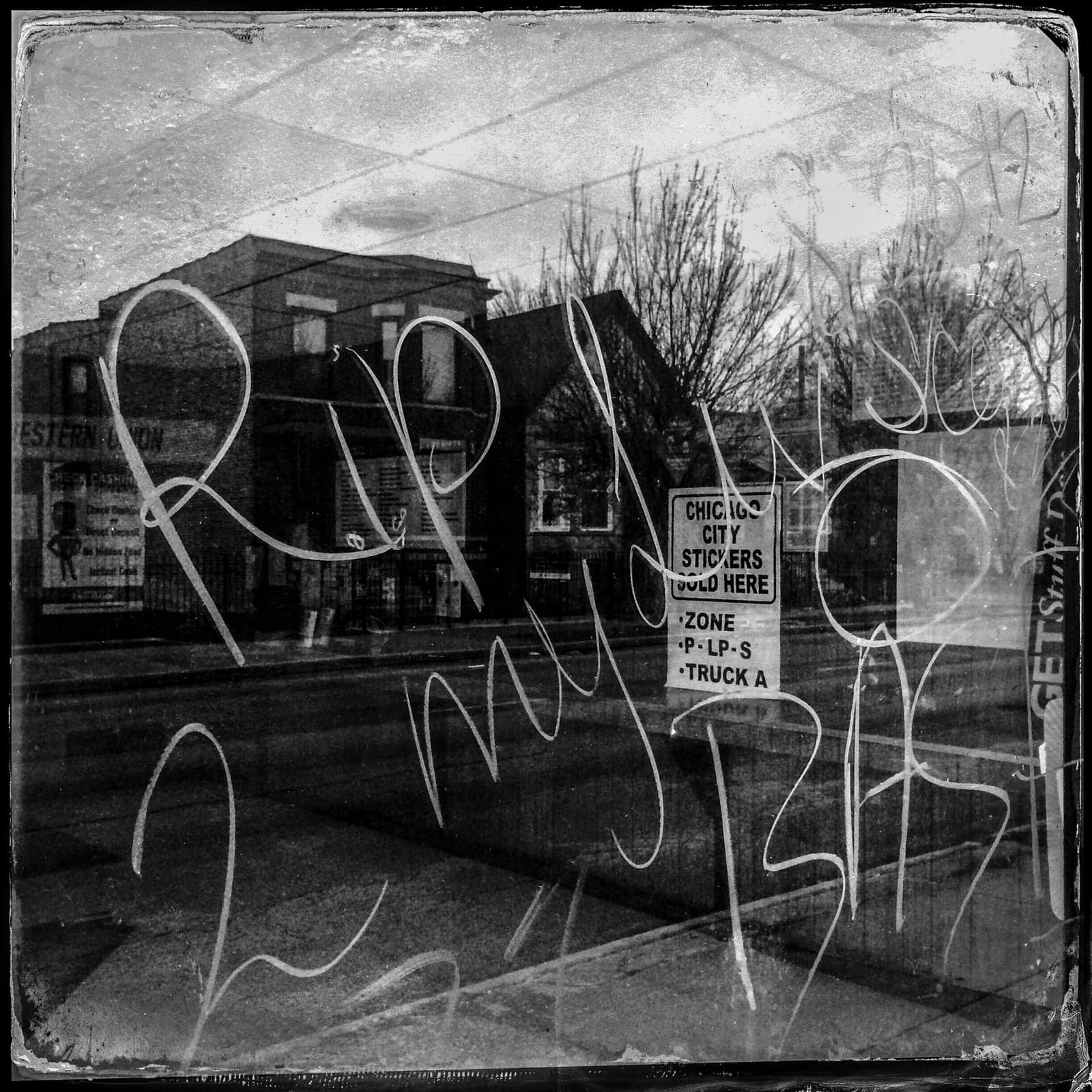
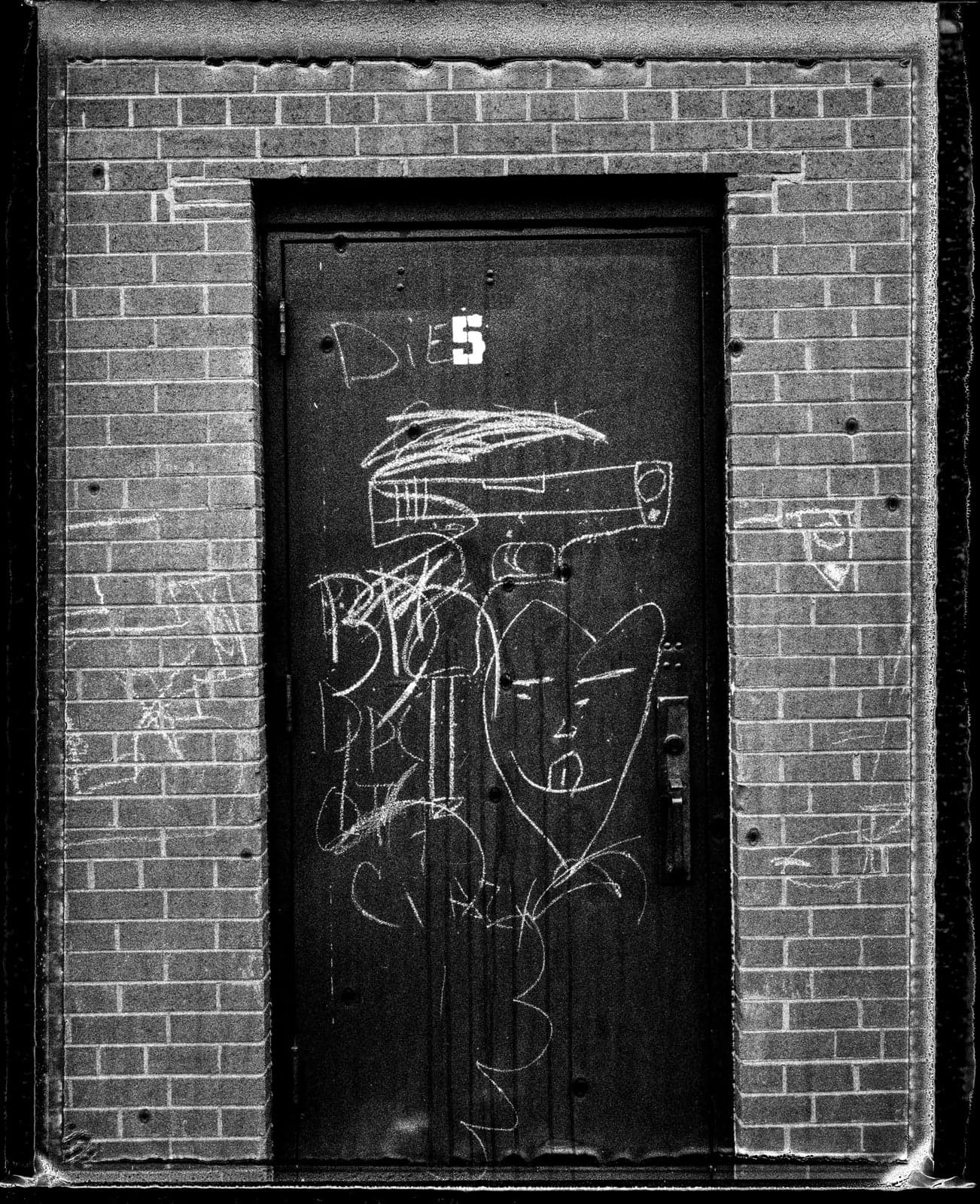
This sense of loss permeates other images. A vacant storefront in Woodlawn, captured in 2014, bears a simple, poignant "RIP" sign. It’s a quiet memorial, a placeholder for grief in a landscape of economic decline and structural neglect. The empty shopfront, once a hub of commerce or community, now stands as a tombstone, speaking to both individual tragedy and the broader erosion of neighborhood vitality. Nearby, in Englewood in 2009, the back of the recently closed Guggenheim Elementary School is defaced with gang graffiti etched in chalk. This image connects the dots between community decline, the failure of public institutions like schools, and the social fragmentation that allows such stark markings of territory and despair to proliferate. The debate over public education, as the caption notes, rages on, but the physical evidence of its failures is etched into the very fabric of the city.
Under the Ghetto Bird
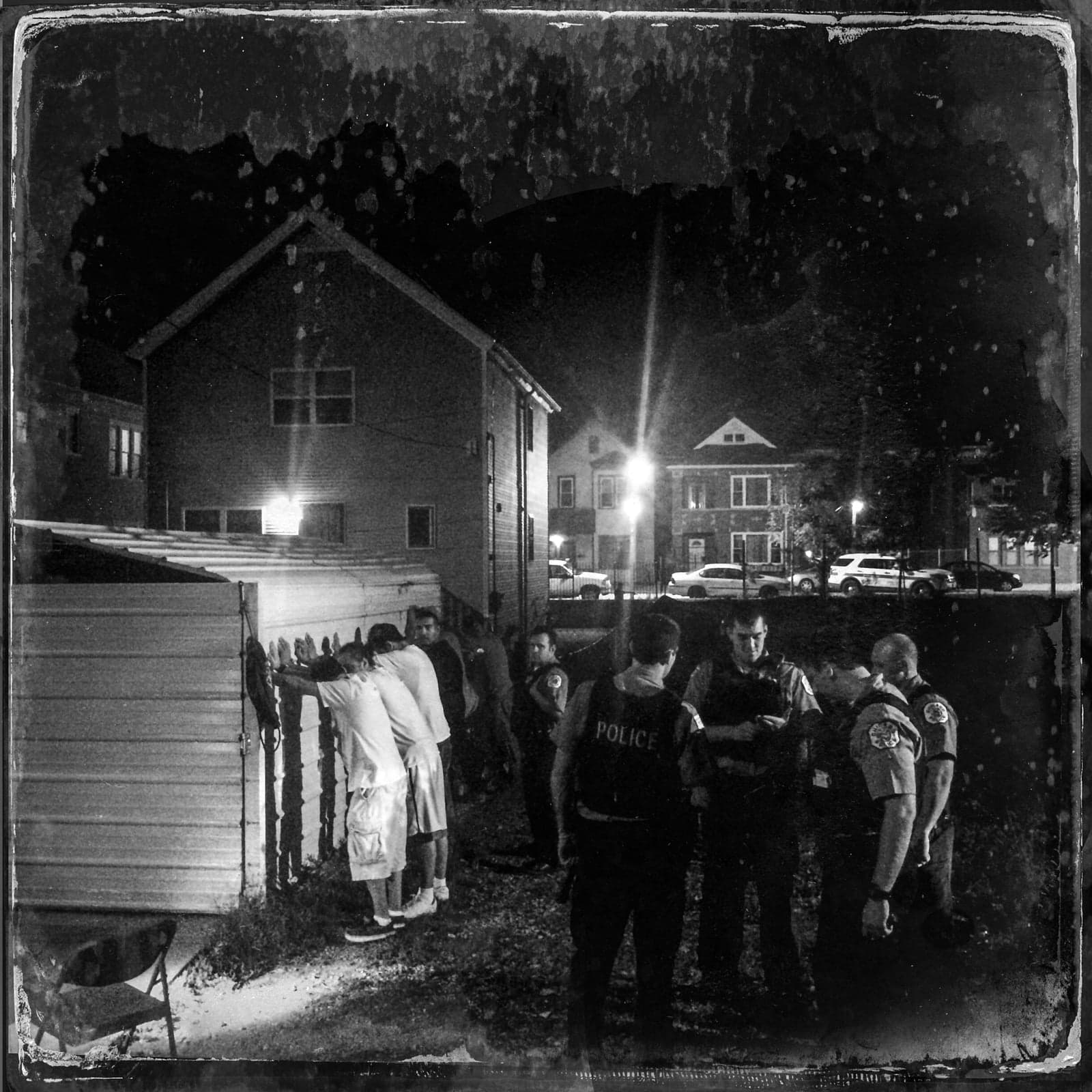
The presence of state power, often experienced as a controlling, rather than protective, force, is a constant in many Chicago neighborhoods. "The Ghetto Bird aka Chicago Police Helicopter was flying above the 'hood tonight," Lowenstein writes in 2014, describing a familiar nocturnal ballet of surveillance and apprehension. Sirens blare, and the photographer races through the South Side, encountering multiple situations where "black and brown guys" are pressed against squad cars, questioned under harsh lights. These are "the hardest to roll up on," he admits, moments of intense vulnerability and potential escalation. Yet, he perseveres, driven by a need to document the systemic nature of these encounters.
At 91st Street, an alley scene unfolds: police cars parallel to Metra tracks, a group of men against a wall, separated by a chain-link fence. Lowenstein, asserting his role as press, is allowed to shoot. The casual, almost theatrical nature of the interaction is striking: officers questioning, then releasing the men, one of whom, in a wheelchair, simply says, "I don't know" when asked what happened. The photographer’s closing reflection captures the cyclical nature of these events: "It was almost as if I had witnessed a play that happens over and over again each night and day." This isn't an isolated incident; it's a recurring act in the city's drama, a constant performance of power and subjugation. The sheer scale of this system is underscored by the imposing exterior of the Cook County Jail in Little Village, photographed in 2009, a monumental structure that houses one of the largest county jail populations in the United States, a chilling testament to the reach of incarceration.
Echoes of Resistance
Yet, even amidst the pervasive shadows of violence and policing, the spirit of community and resistance endures. The city is not merely a stage for struggle; it is also a crucible for collective action. In 2014, Jedidiah Brown organized an anti-violence march in the South Shore neighborhood, a powerful demonstration of collective grief and defiant hope. He borrowed several coffins from a local funeral home, and led a march of over 400 people, transforming symbols of death into instruments of protest. This act of public mourning and demand for change stands in stark contrast to the isolated dead man in the abandoned lot; here, loss is communal, and the response is organized, vocal, and visible.
These moments of collective assertion, whether in solemn protest or joyous celebration, are the enduring counter-narrative to the city’s hardships. The sweaty young person at the Bud Billiken Parade, caught in a moment of pure, unadulterated joy, represents the tenacious life force that persists. Their vibrant blue costume, a splash of color against the urban backdrop, is not merely an outfit but a declaration. It speaks to the enduring capacity for culture, for gathering, for moments of unburdened self-expression that defy the weight of the pavement and the looming presence of the 'Ghetto Bird'. Chicago, in Lowenstein’s unflinching gaze, is a city where life is constantly negotiated, where the echoes of sirens and the silence of vacant lots are always in dialogue with the shouts of celebration and the determined footsteps of those who march for peace. It is a place where, against all odds, the play continues, and the human spirit finds ways to perform, to protest, and to prevail.

Images from this essay
All photographs are rights-managed and available for editorial licensing or as fine-art prints.

More in Essay
Stay with the work.
New essays, delivered when they’re ready.